Rules
Part of From seed lot to hardened transplant: propagating cut flowers step by step
Why do cut flower seedlings damp off, stretch, or stall?
Cut flower seedling problems include poor germination, damping-off, algae, legginess, scorch, nutrient symptoms, root binding, and transplant shock.
What to take away
- Diagnose trays by pattern, timing, roots, and environment before treating symptoms.
- Poor germination is different from seedling death after emergence.
- Damping-off is favored by conditions such as wet, cool media and poor sanitation.
- Leggy growth points first to light, temperature, crowding, or timing, not fertilizer shortage.
- Preserve labels and isolate suspect lots so one problem does not become a nursery-wide mystery.
Cut flower seedling problems move quickly because cells hold little water and young plants have few reserves. The useful response is a short, repeatable check: isolate, label, inspect roots, measure the environment, compare healthy trays, and record the change.
Seeds do not emerge
Possible causes: nonviable seed, wrong temperature, inconsistent moisture, incorrect depth, a light requirement that was missed, seed dormancy, or decay.
Why Seed Did Not Emerge
Dig several cells carefully
Intact dry seed -> water never reached it
Soft discolored seed -> decay
Check: dig several cells carefully. Intact dry seed suggests water did not reach it. Soft or discolored seed suggests decay. Germinated seed trapped below a crust points to depth or surface condition. Compare medium temperature with the crop requirement.
Response: correct the environment and resow before the backup deadline. Run a counted germination test on the remaining lot when viability is uncertain. Do not keep a failed tray indefinitely merely because one late seed may emerge.
Seedlings collapse at the soil line
Possible cause: damping-off organisms — chiefly Pythium, Rhizoctonia solani, Phytophthora, Botrytis, and Fusarium — can attack before or after emergence, particularly in a wet, cool, contaminated environment. Fine-seeded cut flowers such as lisianthus, snapdragon, stock, and celosia emerge slowly and stay exposed to it the longest.
Illinois Extension's guide to troubleshooting seed-starting problems describes affected seedlings collapsing at or below the medium line. It recommends prevention through clean containers, fresh well-drained medium, suitable warmth, correct sowing depth, and avoiding overwatering.
For species-level germination temperatures, light targets, and plug schedules, the Association of Specialty Cut Flower Growers' crop guides and state extension cut flower production guides go beyond the general seed-starting troubleshooting above.
Response: isolate the tray, remove affected material, correct moisture and airflow, and clean the area. Severely affected seedlings usually do not recover. Review whether reused medium, dirty trays, dense sowing, or a covered tray remained wet too long. Where losses repeat, a labeled biological control such as Trichoderma harzianum (RootShield) can be mixed into the medium or applied as a drench for damping-off suppression; confirm the label lists your crop. Disinfect reused trays, flats, and tools between sowings with a labeled greenhouse product such as a quaternary ammonium disinfectant.
Green algae or fungus gnats appear
Likely condition: the surface remains moist for long periods. Algae itself may be more indicator than primary killer, while fungus gnat larvae can damage roots in some situations.
Response: allow the surface to approach the crop's safe drying point, improve drainage and airflow, remove standing water, and correct leaks. Do not apply a pesticide until the pest is identified and the product is labeled for the site and crop.
Seedlings are tall, pale, and leaning
Possible causes: inadequate light intensity, fixture too far from the canopy, excessive warmth, long nursery time, or crowding. Stretch costs marketable stem length, and snapdragon, stock, lisianthus, celosia, and zinnia are among the quickest cut flowers to lean toward the light.
One Stretched Edge vs Whole Rack
One stretched edge
- Likely cause
- environmental gradient
- Light
- uneven across shelf
- Temperature
- local warm spot
- Density
- crowded corner
- Action
- fix that spot
Whole rack stretched
- Likely cause
- system issue
- Light
- fixture too far
- Temperature
- excessive warmth
- Density
- crowding throughout
- Action
- correct the system
Check: measure or compare light across the shelf, inspect fixture height and timer, check day and night temperature, and count plant density. Hold fixtures at the distance recommended for the fixture so the canopy receives bright light without heat stress, and compare the reading against your crop's guidance. One stretched edge suggests an environmental gradient; the whole rack suggests a system issue.
Response: increase suitable light, correct distance, lower temperature where crop guidance supports it, thin, or reschedule future sowings. Do not bury every stretched stem deeply during potting unless the crop tolerates that practice.
Leaves bleach or scorch
Possible causes: sudden strong sun during hardening, excessive fixture heat, fertilizer salts on leaves or roots, spray injury, or water droplets under intense conditions.
Check: map damage to the light-facing surface, sprayer path, tray edge, or feed event. New leaves that emerge normally after a one-time exposure support a past injury.
Response: make exposure gradual, verify fixture temperature, review concentration and application, and protect seedlings from the first harsh outdoor hours.
Leaves are pale or purple
Possible causes: nutrient shortage, cold roots, unsuitable pH, saturated medium, damaged roots, or normal crop pigmentation.
Check: inspect roots and medium moisture, verify feed records, measure pH and soluble salts where appropriate, and compare cultivars. A complete fertilizer is not a diagnostic test.
Response: correct the supported limitation. If roots are brown and oxygen-starved, stronger feed may increase injury.
Seedlings stop growing in small cells
Possible causes: root binding, exhausted medium, irregular watering, low light, or a field date that moved. Slow plug crops such as lisianthus, stock, dianthus, and celosia stall first once cells fill with roots.
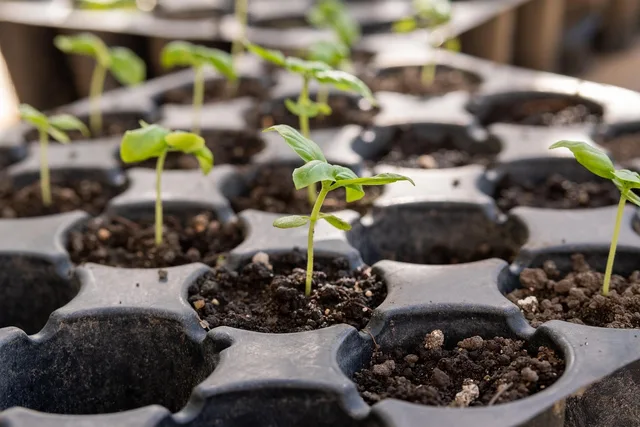
Check: slide out several plugs. Healthy white roots at the cell edge may indicate the plant needs more volume; a sparse brown root system points elsewhere.
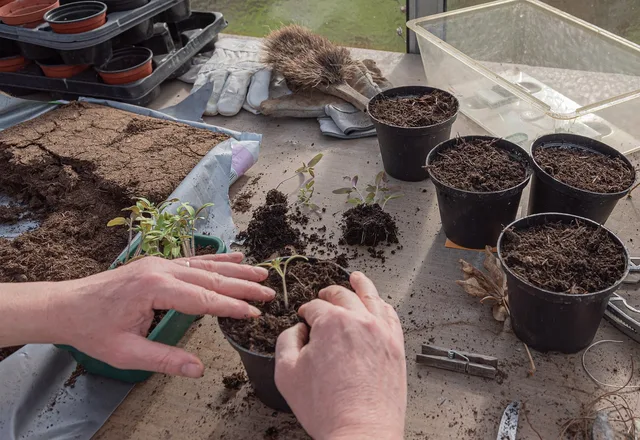
Penn State Extension's instructions for transplanting annual seedlings warn that leaving seedlings crowded too long can produce weak, spindly plants and describes moving them into a sterile soilless mix while handling by the leaves rather than the easily injured stem.
Response: pot on if schedule and capacity justify it, or slow growth carefully through suitable temperature and nutrition management. Do not let delayed planting convert every tray into an emergency repot.
Plants wilt during hardening
Possible causes: abrupt sun and wind, small dry cells, root damage, or a jump in evaporative demand.
Response: return plants to protection, rehydrate without leaving them saturated, and restart with shorter exposure. Inspect weather, not only temperature; wind and low humidity can dry a tray fast.
Transplants stall after planting
Possible causes: inadequate hardening, cold or saturated soil, root-bound plugs, planting too deep, damaged roots, dry root balls, or poor field irrigation.
Check: lift a failed plant and a survivor. Compare roots, planting depth, soil moisture, and plug-to-soil contact. Map failures against the irrigation layout and planting crew.
Response: correct water and planting technique immediately. Replace only after the underlying field condition is suitable, or the new plants will repeat the loss.
Common questions
Can damping-off seedlings be saved with fertilizer?
No. Fertilizer does not cure infected, collapsed seedlings. Focus on containment and prevention for remaining and future trays.
Why does one side of every tray dry first?
Airflow, shelf level, fixture heat, room geometry, or watering technique may create the pattern. Measure before rotating trays as a permanent workaround.
Should purple seedlings receive phosphorus?
Not from color alone. Cold roots, genetics, pH, and other stresses can produce similar coloration. Confirm the cause.
Is potting on always the fix for stalled seedlings?
No. Inspect roots and environment. A larger pot will not correct poor light, saturated medium, or diseased roots.