Guides
Cut flower nutrition, from bed history and pH to a monitoring routine
Cut flower soil and fertility guide covering tests, structure, organic matter, pH, nutrients, compost, fertilizer calculations, monitoring, and records.
What to take away
- Most cut flowers target pH 6.0 to 7.0, with phosphorus and potassium read against your own laboratory's sufficiency ranges.
- Sample the top 6 inches, 10 to 15 cores per uniform area, and retest in the same season every one to three years.
- Named packages do the jobthe UMass Amherst Soil and Plant Nutrient Testing Laboratory Standard Soil Test and the Penn State Agricultural Analytical Services Lab Standard Soil Fertility Test.
- Convert every recommendation into pounds of product per 100 square feet, then judge the program on marketable stems.
Cut flower nutrition runs on four steps: a representative sample, a target range, product weight, and a record of what the crop did.
Set pH and nutrient targets
Compare your numbers with the ranges on your own report, because laboratories use different extractants and units. The typical ranges below suit mixed annual cut flower beds.
| Measure | Typical range | Note |
|---|---|---|
| pH | 6.0 to 7.0 | Snapdragons and lisianthus prefer the upper half. |
| Phosphorus, Mehlich 3 | 25 to 50 ppm | Bray P1 and Olsen results differ. |
| Potassium | 150 to 250 ppm | Sandy beds lose potassium faster. |
| Calcium | 1,000 to 2,000 ppm | Low calcium with low pH points to lime. |
| Magnesium | 150 to 300 ppm | Dolomitic lime supplies both. |
| Organic matter | 3 to 6 percent | Sandy beds sit well below this. |
Crop codes on the report override those figures. A pH tolerant crop still yields poorly when calcium is low and the bed stays wet.
Sample the top 6 inches
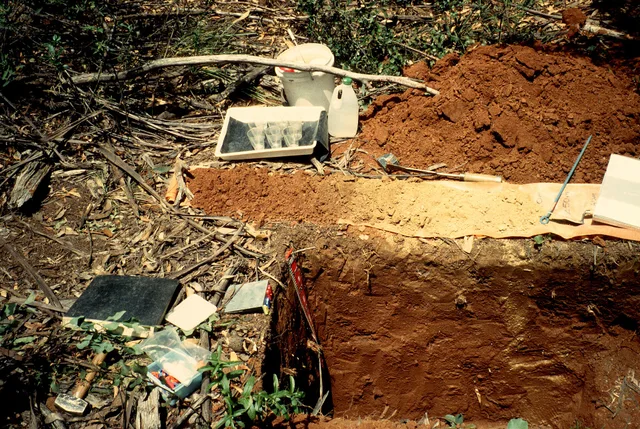
Draw sampling units before you dig. A wet corner, an old compost heap and the main bed are different soils. Blending them gives one average that describes none of them.
Bed history before sampling
- Prior crops and amendments
- Manure and fertilizer records
- Liming and flooding history
- Construction traffic and drainage work
- Map visibly different zones
- Measure production area
If a single sample may not represent a whole bed, sampling a cut flower bed works through the zoning decision.
- Take 10 to 15 cores per unit from the top 6 inches with a clean auger or trowel.
- Mix the cores in a plastic bucket, then fill the laboratory bag and label unit, depth and date.
- Sample in late summer or early fall for a spring planting, or in early spring before lime or compost is spread.
- Retest every one to three years, and after any lime or sulfur application.
- Order a package covering pH, buffer pH, phosphorus, potassium, calcium, magnesium and CEC. Nitrogen is often excluded because nitrate moves.
Compost and manure as inputs
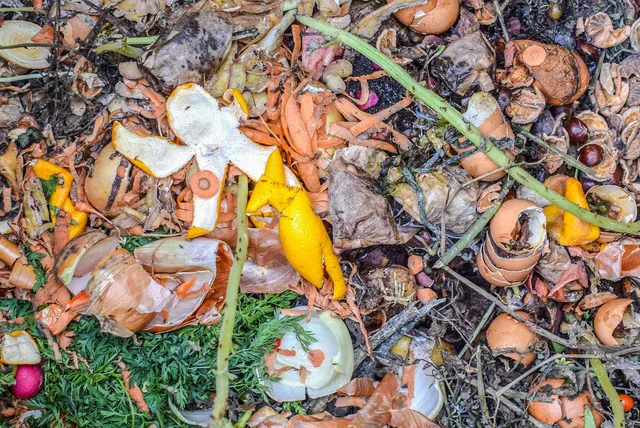
Compost earns its place by changing soil properties, not by replacing a fertilizer program. The USDA Natural Resources Conservation Service explains the role of organic matter in infiltration, structure and water holding, which build over years of residue inputs.
Ask for a compost analysis when you buy volume, because manure-based compost often carries more phosphorus and salt than leaf-based material, and compost, manure and synthetic sources sets the two side by side.
Example: phosphorus and lime by weight
US laboratories quote rates as pounds of actual nutrient per 100 square feet, or per 1,000 square feet. A 100 square foot bed measures about 4 feet by 25 feet, so divide per-1,000 rates by ten.
Product needed = nutrient needed / decimal nutrient fraction in the bag.
Example. A report asks for 0.15 pound of P2O5 per 100 square feet. Triple superphosphate is 0-46-0, so divide by 0.46: 0.33 pound of product per 100 square feet. Nitrogen follows the same division, where 0.10 pound at 10 percent needs 1 pound of product.
Lime needs one more step. A report asks for 50 pounds of agricultural limestone per 1,000 square feet. If the product carries a calcium carbonate equivalent of 90 percent, the rate becomes 56 pounds per 1,000 square feet, or 5.6 pounds per 100 square feet.
Check blends before buying. A 10-10-10 applied at the nitrogen rate would add phosphorus and potassium the test did not request, and turning a nutrient report into a plan shows how to spread each product across the season.
Time applications to crop demand
- Lime, phosphorus and compost worked into the top 4 to 6 inches before planting.
- Potassium and nitrogen split across the season, with the larger share before stems elongate.
- Nothing granular within a few inches of the stem or crown.
- Irrigation checked before any feeding, because dry soil and salt injury look alike.
- Sulfur or acidifying products only where the report asks for them.
Split mobile nutrients when growth is rapid and irrigation is managed. A single large dose on a sandy bed is mostly lost.
Timing beats brand. Slow-release products release on temperature and moisture, so their schedule follows the season rather than the calendar on the bag.
Granular products need moisture to dissolve, so water after a dry application.
Record date, product, batch, rate and area for each application. Repeated unmeasured lime is how beds drift far from target, and drift shows up as a deficiency two seasons later.
Place amendments before planting when they must be incorporated, and setting up a cut flower garden sequences that work around bed shaping, irrigation lines and support installs.
Monitoring that answers the question
Leave an untreated strip wherever the bed is large enough. Record stem length, usable stems, cull rate, harvest date and lodging.
More leaf is not more saleable stem when stems turn soft or late. A yield response has to clear the added cost, and the Purdue Extension cut flower budget lists the cost and return lines per acre.
Retest in the same season, through the same laboratory, at the same depth. Trends across years beat one tidy report.
Common questions
What pH should I aim for?
How deep and how often do I sample?
Which materials change pH?
Does compost replace fertilizer?
In this guide
- Is a quick soil sample enough to represent a whole cut flower bed?Soil sampling for cut flower beds explained step by step, including zone mapping, clean tools, consistent depth, composite mixing, labels, and reports.
- Compost vs fertilizer: four inputs comparedCompost vs fertilizer: how compost, manure, organic fertilizer, and synthetic fertilizer differ in nutrient certainty, release, watch points, and fit.
- Cut Flower Fertility Checklist for Soil Sampling and RecordsUse this cut flower fertility checklist to organize sampling, read lab reports, review compost, check fertilizer math, record applications, and monitor crops.
- Cut flower soil problems: compaction, salts, and pH in the fieldField diagnosis of cut flower soil problems: compaction, poor drainage, soluble salts, pH, nutrient imbalance, excess compost, and surface crusting.
- Cut flower soil recovery: an illustrative diagnostic processCut flower soil recovery, illustrated by a fictional bed: how a grower maps symptoms, separates samples, matches actions to causes, and reviews a crop trial.