Reviews
Part of Cut flower nutrition, from bed history and pH to a monitoring routine
Compost vs fertilizer: four inputs compared
Compost vs fertilizer: how compost, manure, organic fertilizer, and synthetic fertilizer differ in nutrient certainty, release, watch points, and fit.
What to take away
- Compost and manure are variable materials whose nutrient contribution must still be counted.
- Fertilizer labels state guaranteed nutrients, but fertilizer does not repair compaction or drainage.
- Organic fertilizer usually releases nutrients through biological processes and may act more slowly.
- Synthetic fertilizer can deliver a precise soluble dose but can injure crops when misplaced or overapplied.
- Choose an input from a measured soil goal, crop timing, product analysis, and handling capacity.
The four labels in this compost vs fertilizer comparison describe overlapping categories, not four perfect opposites. Manure may be composted. Compost can contain manure. An organic fertilizer can be made from plant or animal by-products. A synthetic fertilizer may contain the same plant-available nutrient ions released from an organic source.
The practical distinction is what the material contributes, how predictable that contribution is, when nutrients become available, and which risks come with storage and application.
Comparison table
Primary reason to use
- Finished compost
- Organic matter and soil-condition goal
- Manure
- Organic matter plus recoverable nutrients
- Organic fertilizer
- Supply declared nutrients from allowed natural sources
- Synthetic fertilizer
- Supply a measured nutrient concentration
Nutrient certainty
- Finished compost
- Variable unless analyzed
- Manure
- Variable by animal, bedding, storage, and age
- Organic fertilizer
- Label-dependent
- Synthetic fertilizer
- Usually high from guaranteed analysis
Release pattern
- Finished compost
- Some immediate, much gradual
- Manure
- Mix of available and gradual forms
- Organic fertilizer
- Often microbially mediated
- Synthetic fertilizer
- Often rapid, depending on formulation
Main watch point
- Finished compost
- Salts, phosphorus, maturity, contamination
- Manure
- Pathogens, weeds, salts, phosphorus, ammonia
- Organic fertilizer
- Temperature-dependent release, product variability
- Synthetic fertilizer
- Salt injury, leaching, excess, placement
Compost
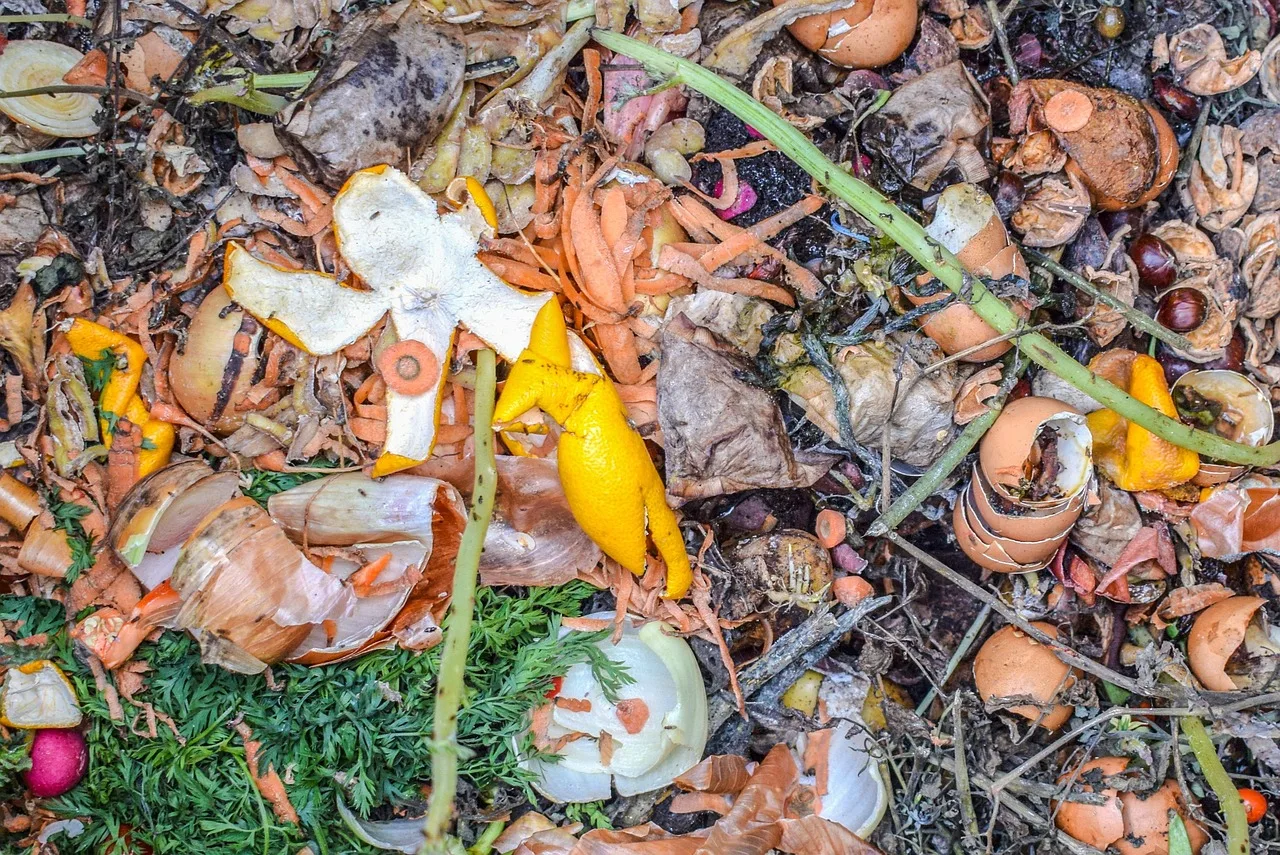
Finished compost is decomposed material used mainly to add stable organic matter and improve soil condition. It may contribute nutrients, but a volume-based application made every year can accumulate phosphorus, potassium, or salts.
Inspect source materials, maturity, odors, weed growth, particle size, foreign matter, and analysis. Ask for test results when buying bulk compost. A product suited to landscaping may not be suited to a seed-starting mix or a production bed.
Colorado State University Extension's explanation of soil amendments and fertilizers distinguishes a material mixed into soil to improve its properties from a fertilizer that contains an available plant nutrient. It also notes that organic fertilizer nutrients often require microbial conversion before plant uptake and should not be confused automatically with inputs allowed in certified organic production.
Raw or aged manure
Manure composition changes with animal species, feed, bedding, storage, moisture, and composting. It can add organic matter and nutrients, but "aged" is not a laboratory result or a safety process description.
Count manure-derived nitrogen and phosphorus in the fertility budget. Where edible material is also grown, check the crop-specific intervals between application and harvest set by the FDA's Produce Safety Rule under the Food Safety Modernization Act, along with state produce-safety guidance. Store and apply manure so runoff cannot reach water, neighboring land, or packed flowers.
Manure-based products can have high salts. A flower bed does not become safer because the input is natural.
Organic fertilizer
Organic fertilizers are concentrated nutrient products derived from natural sources. Examples can include meals, emulsions, mined minerals, and processed by-products. Their labels and permitted uses vary.
Many depend on soil organisms to mineralize nutrients, so release can lag in cold or biologically inactive soil. That slower pattern can fit sustained demand but may miss a rapid correction window. Some products release a soluble fraction quickly. The same caution applies on the seedling bench, where the propagation guide ties first feeding to crop stage rather than habit.
For certified organic production in the United States, the governing standard is the USDA National Organic Program, and inputs are checked against the National List of allowed and prohibited substances. Verify the intended product with your certifier before application, and check whether it appears on the OMRI Products List. A natural origin, an "organic" word on a retail label, and approval under a production standard are separate facts.
Synthetic fertilizer
Manufactured fertilizer can provide a known concentration in a compact form. This makes rate calculations and targeted correction straightforward. Soluble products can also move or burn roots when the dose, placement, irrigation, or weather is wrong.
Synthetic nutrients do not build soil structure merely because plants grow after application. They can support biomass that later contributes residues, but the fertilizer granule itself is not a substitute for pore space, aggregation, or organic inputs.
What plants absorb
Roots take up nutrients in ionic forms. The plant does not assign moral value to the source. Colorado State's plant nutrition guide explains that the practical differences include nutrient concentration and the speed at which nutrients become available. It also warns that fertilization cannot compensate for poor preparation, missing water, weed competition, or another limiting factor.
This is why source debates should follow diagnosis. If a test shows no phosphorus need, adding either bone meal or a synthetic phosphorus product is not sound simply because one source is preferred.
Choose with a decision matrix
Score each candidate against:
- the measured nutrient or soil-condition goal;
- the crop's demand period;
- product analysis and batch consistency;
- salt and pH effects;
- pathogen, weed-seed, and contamination risk;
- storage, spreading, and incorporation labor;
- runoff and leaching risk;
- certification or customer requirements;
- cost per pound of needed nutrient; and
- effect on other nutrients already at or above target.
The winning material may be a combination. A tested compost rate can address an organic-matter goal, while a separate fertilizer supplies only the nitrogen deficit. Keeping the purposes separate prevents a grower from applying excessive compost to chase nitrogen.
A calculation example
If a soil recommendation calls for 0.20 pound of nitrogen across 200 square feet, a 5 percent nitrogen product requires 0.20 / 0.05 = 4 pounds of product. A 20 percent product requires 0.20 / 0.20 = 1 pound.
Nitrogen Product Calculation
- 0.20 lbnitrogen needed per 200 sq ft
- 5%product requires 4 lb
- 20%product requires 1 lb
This comparison says nothing about release timing or whether either product is suitable. Those questions must be resolved from the label, crop plan, and conditions.
Common questions
Is compost a fertilizer?
It contains nutrients, but it is usually used chiefly as a soil amendment. Its nutrient contribution still belongs in the budget.
Is synthetic fertilizer harmful to soil life?
Effects depend on product, dose, placement, soil, and management. Overapplication from any concentrated source can create problems. Use tested need and labeled rates.
Can fresh manure be planted into immediately?
That can create ammonia, salt, pathogen, or weed problems. Fresh manure is a biological soil amendment of animal origin under the FDA's Produce Safety Rule, which sets minimum application-to-harvest intervals, so follow those intervals, the product's directions, and local Extension guidance before planting into it.
Which option is cheapest?
Compare delivered cost, analysis, application labor, nutrient availability, loss risk, and the value of any soil-conditioning effect. Price per bag or yard is not enough.