Rules
Part of 6 pointers on cut flower pest that hold up
What pale leaves and stunted growth reveal about cut flower disease?
Cut flower pest and disease problems diagnosed by crop pattern, plant part, symptom, evidence, recent history, sampling method, and laboratory confirmation.
What to take away
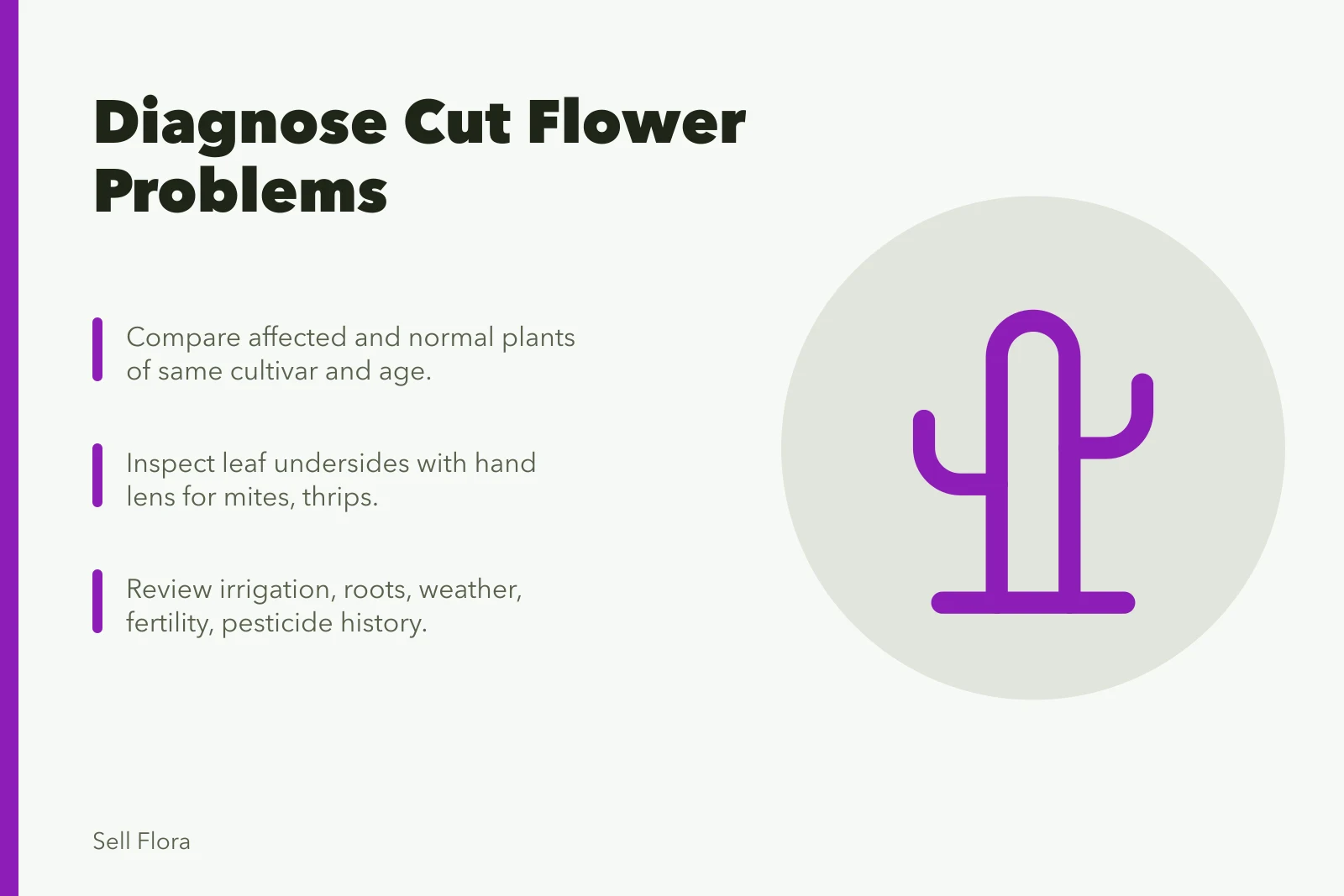
- Start with the crop pattern, then examine the whole plant and the affected tissue.
- Separate symptoms, such as yellowing, from signs, such as insects, spores, or webbing.
- Compare affected and normal plants of the same cultivar and age.
- Review irrigation, roots, weather, fertility, and pesticide history before naming a disease.
- Submit a representative sample when the cause changes the control decision.
This guide organizes questions, not final diagnoses. Many flower problems look alike. A white residue may be fungal growth, dried spray, mineral deposits, or dust. Leaf distortion may come from thrips, aphids, mites, virus, herbicide injury, or temperature. Treating the wrong cause wastes the crop's remaining time and can erase useful evidence.
The whole block is pale or weak
Possible causes: root-zone saturation, poor drainage, compaction, unsuitable pH, nutrient shortage or excess, low temperature, damaged roots, vascular disease, or an irrigation distribution problem.
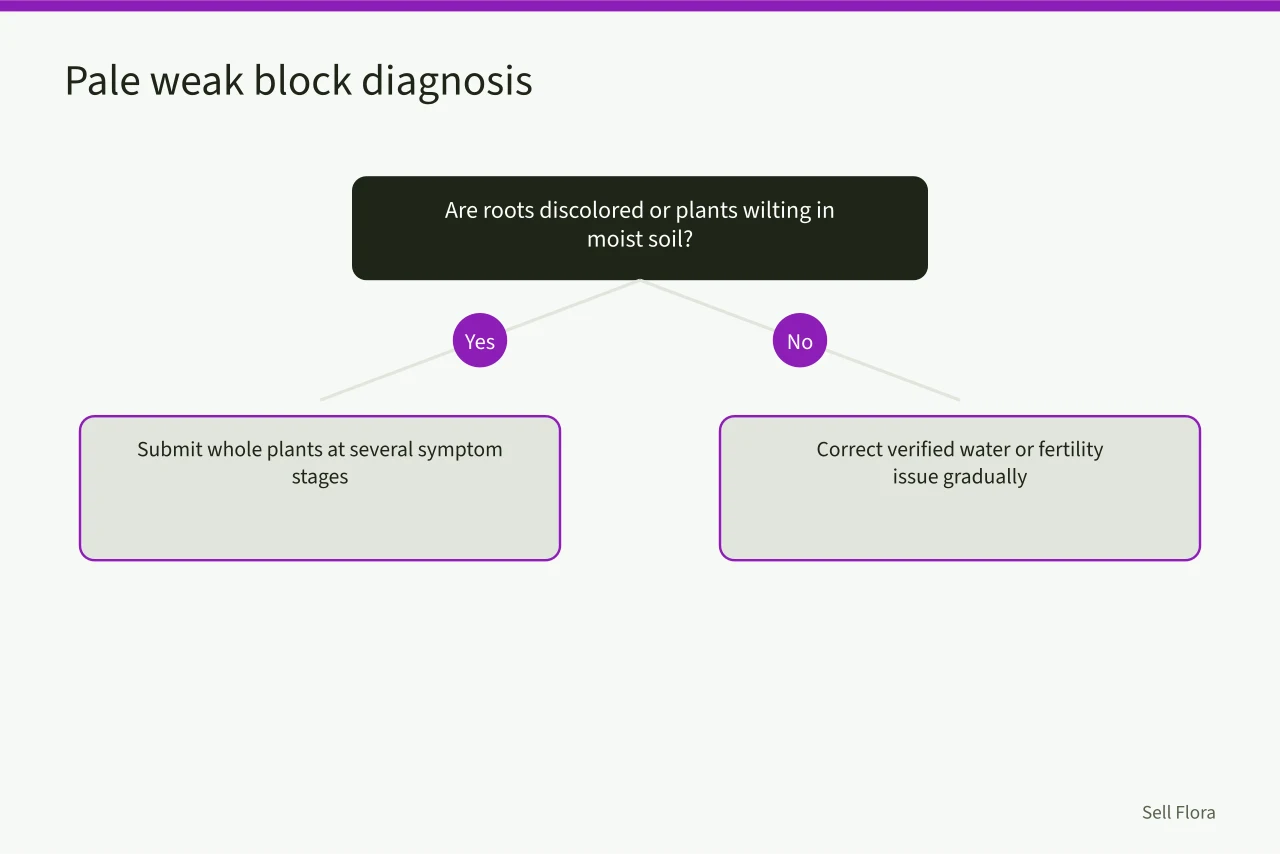
Check: compare affected and normal soil moisture, roots, planting depth, bed elevation, irrigation output, and fertilizer records. Look for a straight-line, low-spot, cultivar, or planting-lot pattern. Cut stems only when a qualified diagnostician requests it and disinfect tools afterward.
Next step: correct a verified water or fertility issue gradually. If roots are discolored or plants keep wilting in moist soil, submit whole plants at several symptom stages rather than applying fertilizer blindly.
Leaves have fine pale stippling
Possible causes: spider mites, leafhoppers, thrips, spray injury, or environmental stress.
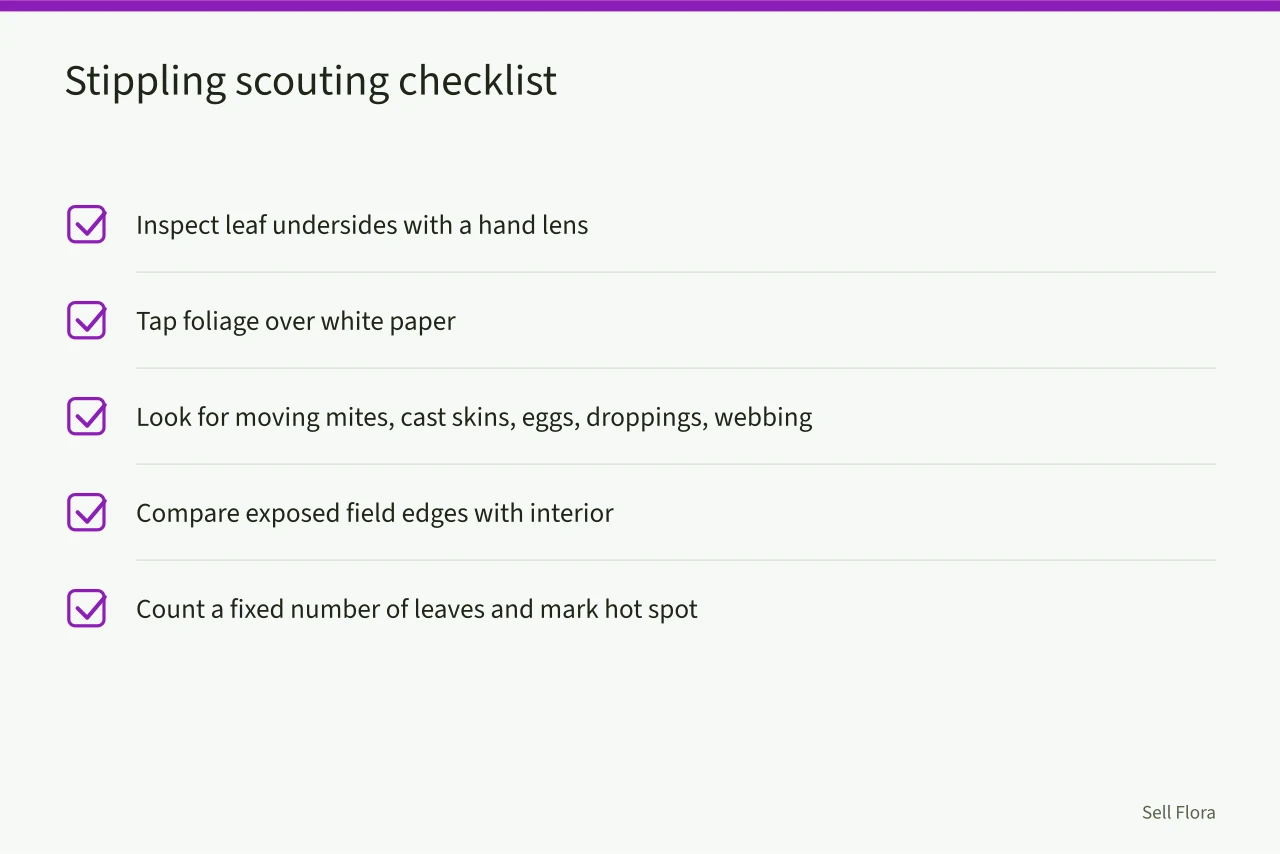
Check: inspect leaf undersides with a hand lens. Tap foliage over white paper and look for moving mites, insects, cast skins, eggs, dark droppings, or fine webbing. Compare exposed field edges and hot, dusty sections with the interior.
Next step: count a fixed number of leaves and mark the hot spot. Confirm the organism and vulnerable stage before selecting a washing, biological, or labeled chemical response.
Growing tips or flowers are distorted
Possible causes: thrips, aphids, mites, virus, herbicide drift, nutrient disorder, cold injury, or cultivar traits.
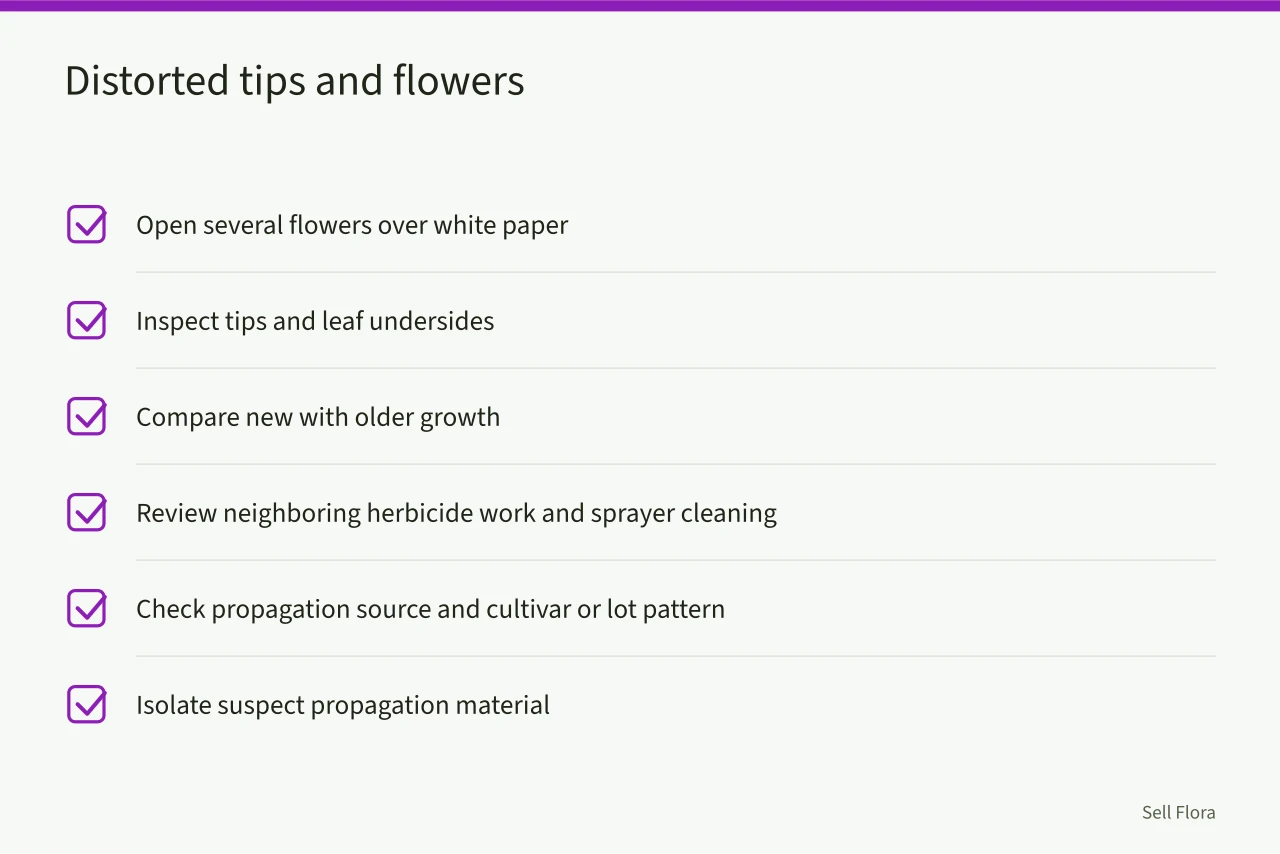
Check: open several flowers over white paper, inspect tips and leaf undersides, and compare new with older growth. Review neighboring herbicide work, cleaned sprayers, propagation source, and whether symptoms follow one cultivar or lot.
Next step: isolate suspect propagation material. Do not take cuttings or tubers from plants with possible virus symptoms. Laboratory testing may be necessary because visual diagnosis cannot reliably separate several viruses and injuries.
Leaves carry white powdery patches
Possible causes: powdery mildew, dried foliar product, hard-water residue, or dust.
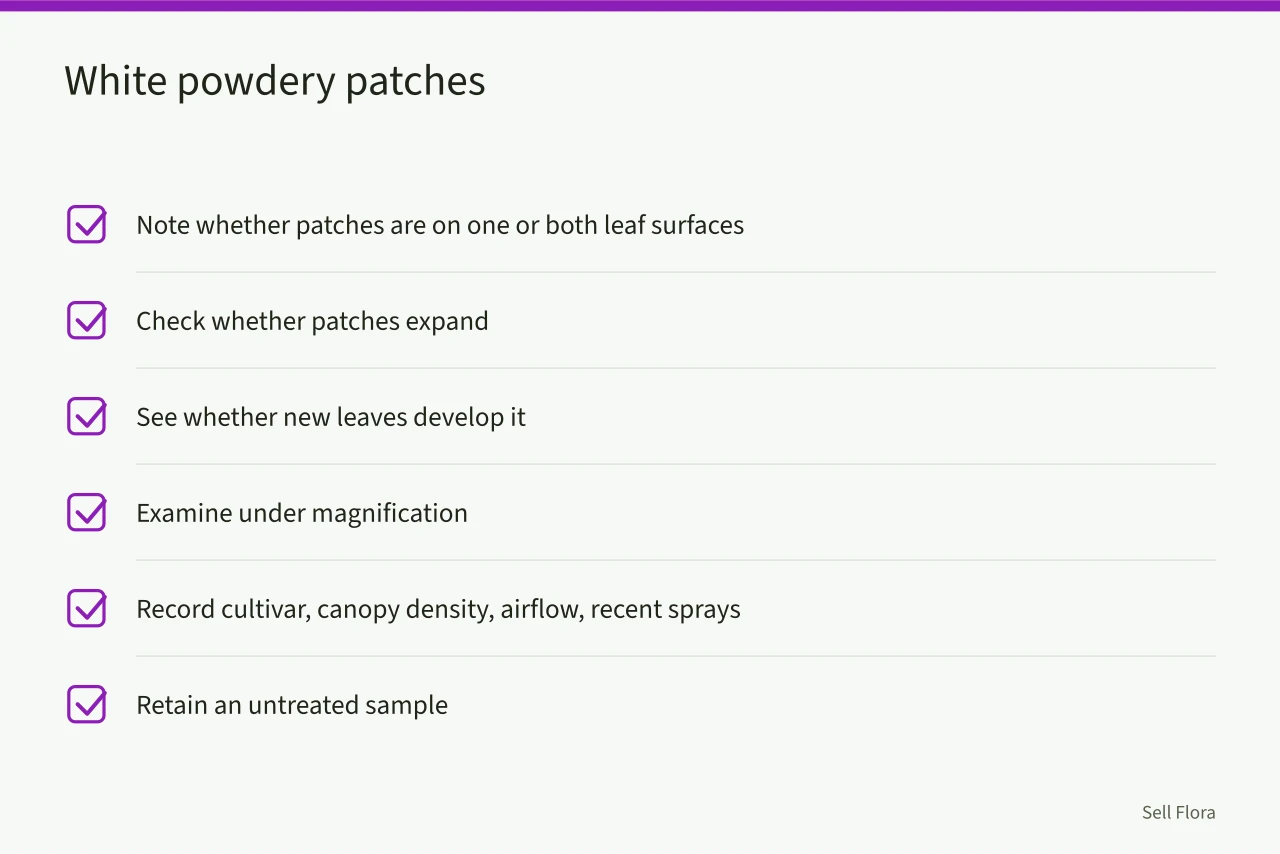
Check: note whether the material appears on one or both leaf surfaces, whether patches expand, and whether new leaves develop it. Examine under magnification. Record cultivar, canopy density, airflow, and recent sprays before wiping any surface.
Next step: retain an untreated sample and seek confirmation when the finding is uncertain. Improve airflow and remove badly affected material under a sanitation plan, but do not assume that one fungicide is labeled or effective for every powdery mildew and flower crop.
Brown or gray lesions spread in dense growth
Possible causes: Botrytis, other fungal or bacterial leaf spots, wet tissue, mechanical injury, phytotoxicity, or senescence colonized by harmless fungi.
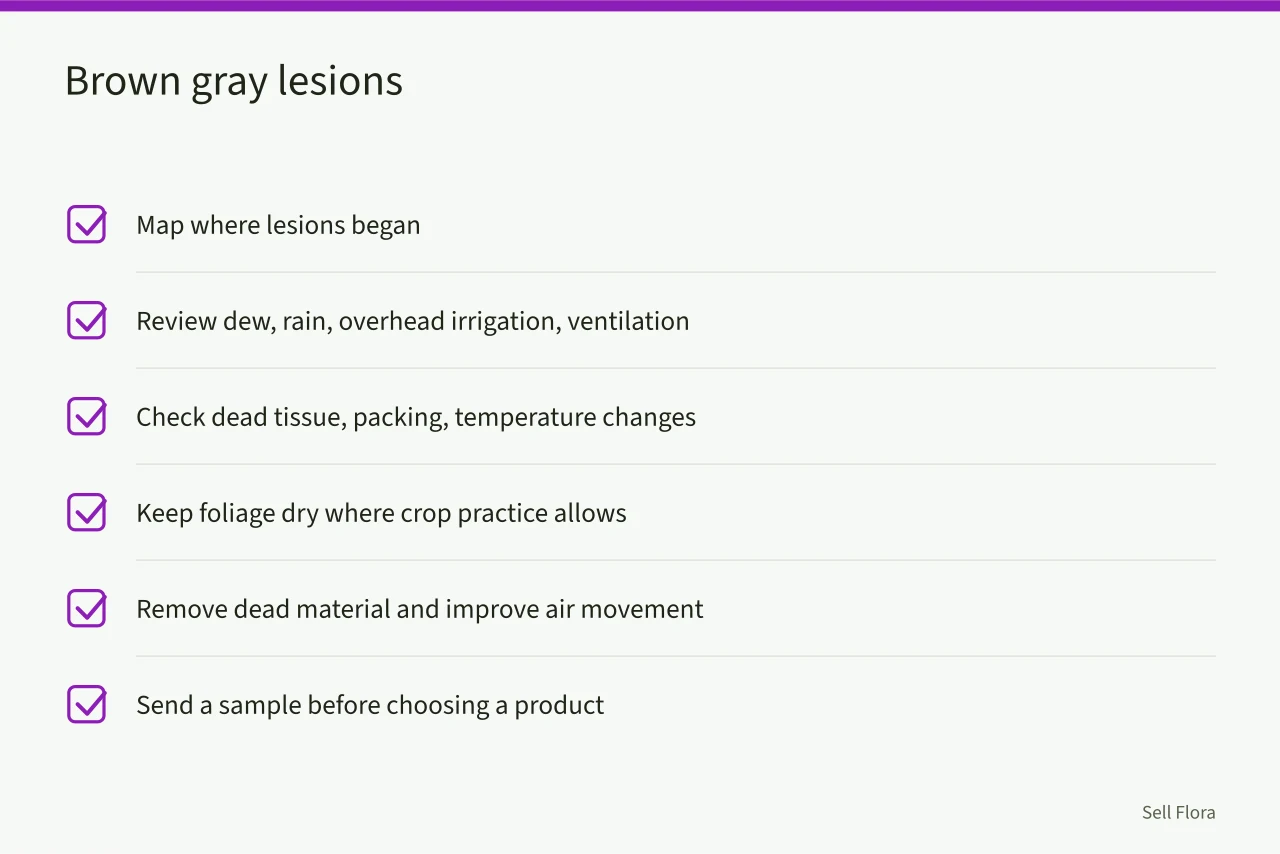
Check: map where lesions began. Review dew, rain, overhead irrigation, ventilation, dead tissue, packing, and temperature changes. Cornell's greenhouse reference explains that Botrytis infection depends on moisture and susceptible tissue and stresses sanitation and condensation control. Those conditions raise suspicion but do not prove that every gray lesion is Botrytis.
Next step: keep foliage dry where crop practice allows, remove dead material, improve air movement, and send a sample before choosing a pathogen-specific product.
Plants wilt although the bed is moist
Possible causes: vascular disease, root rot, stem borer, root injury, heat, salts, poor oxygen, or irrigation that wets only part of the root zone.
Check: compare wilt timing through the day, soil at several depths, roots, crown, stem interior, and nearby emitters. Look for an expanding patch or common planting lot.
Next step: avoid moving soil or roots through healthy beds. Correct water distribution only after measuring it. Submit entire plants, including roots and adjacent soil when the laboratory requests them.
Leaves have holes or ragged edges
Possible causes: caterpillars, beetles, earwigs, slugs, wind tear, hail, handling, or feeding that occurred before transplant arrival.
Check: inspect at dusk and early morning, under leaves, at the crown, and near debris. Look for frass, slime, larvae, and fresh margins. Mark existing holes to separate old from new injury.
Next step: remove or exclude a confirmed target where practical. Do not apply an insecticide to old damage when the pest is gone.
Sticky leaves or black surface growth
Possible causes: honeydew from aphids, whiteflies, soft scales, or mealybugs followed by sooty mold; plant exudate; or spilled solution.
Check: inspect directly above the residue, especially stems, growing tips, and leaf undersides. Determine whether insects are alive, since cast skins and dead scale covers can remain.
Next step: identify the honeydew producer and its life stage. Manage ants if they interfere with natural enemies, but do not treat sooty mold as the primary pest.
Prepare a useful diagnostic submission
Penn State Extension advises senders to collect representative plants across a range of symptom severity, include whole plants when possible, and keep roots and soil separate from tops during packing. Contact the receiving laboratory first because its current instructions govern sample form, packaging, fees, and shipping day.
Include the crop and cultivar, source, planting date, distribution, percentage affected, first symptom date, irrigation, nutrition, pesticide history, weather, photographs, and changes made after symptoms appeared. A dead leaf without farm context often cannot answer the production question.
Common questions
Can an app identify a flower disease from one image?
It can suggest possibilities, but many causes share symptoms. Confirm high-impact decisions with crop pattern, specimens, history, and a diagnostic service.
Should diseased plants go into compost?
It depends on the confirmed organism, compost process, regulations, and farm biosecurity plan. Isolate suspect material until disposal is decided.
Why sample a plant that is only partly affected?
The boundary between normal and affected tissue often contains more diagnostic evidence than tissue that is completely dead and colonized by secondary organisms.
When is treatment justified before laboratory results?
Containment, isolation, tool sanitation, and environmental correction may be prudent while waiting. A pesticide decision still requires a label fit and a defensible target.