Guides
Wedding flower pricing for small flower farms: a working formula
Wedding flower pricing for a small farm needs a cost base before a quote. Here is a working formula, with per-event ranges and where the margin goes.
What to take away
- Price from a cost base, not from what a florist charges. A small farm wedding package typically runs $900 to $3,500 in materials and labor before any profit is added.
- The formula is (stems used x your cost per stem) + design hours + delivery + a waste factor, then a markup. Markup of 2.5x to 3.5x on cost is the common band for direct-to-couple sales.
- Batch size moves the number more than anything else. One wedding means buying in small lots; three weddings in a weekend lets you buy at wholesale and cut cost per stem by roughly a third.
- Deposits and contracts decide whether you get paid. A 50 percent non-refundable deposit at booking is standard in the US wedding market.
- The margin hides in labor and waste, not in the flowers.
What the figure covers
A wedding quote is not a stem price. It bundles stems, conditioning, design time, containers, delivery, setup, breakdown, and the risk that a crop fails the week of the event.
Growers who quote per stem lose money on weddings because the couple is buying an outcome, not a bunch. The outcome includes a person standing in a field at 5 a.m. cutting to a color palette.
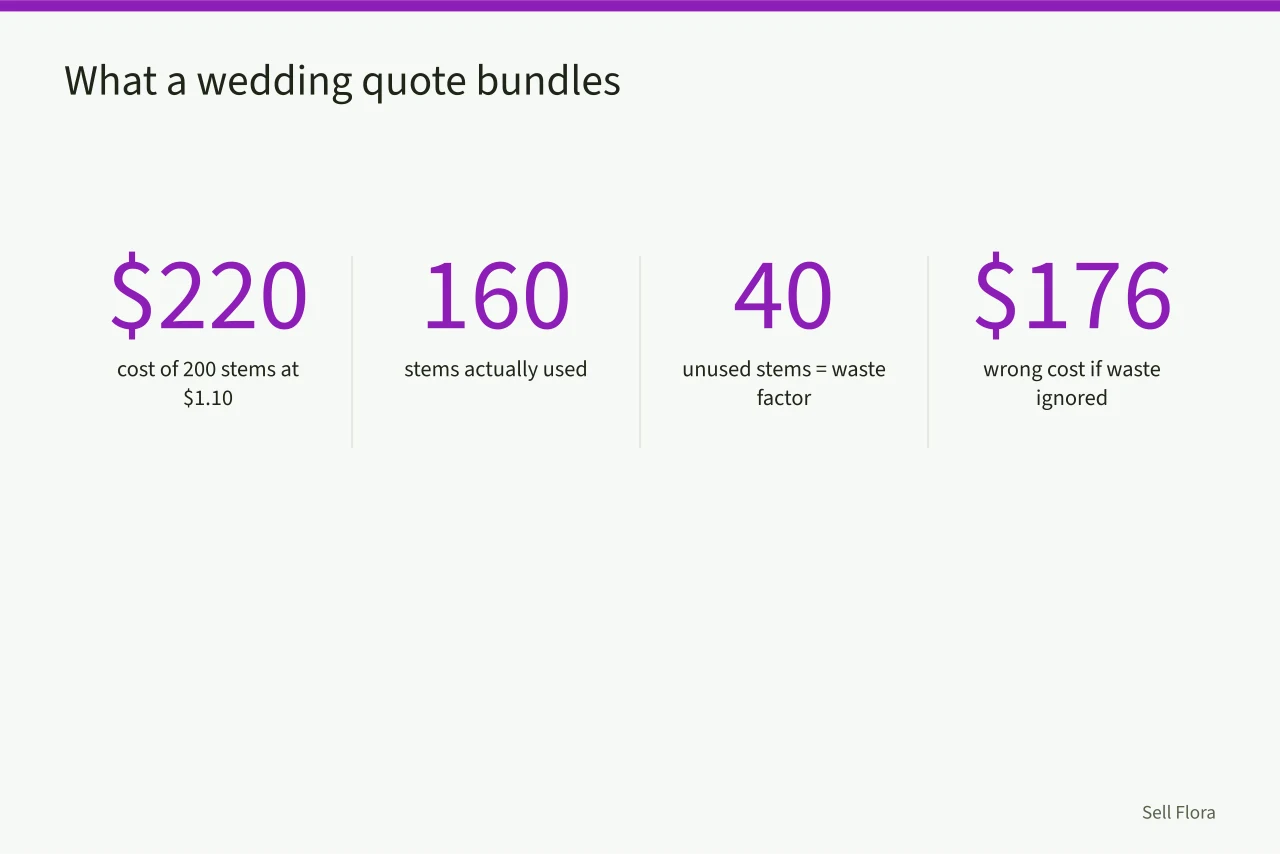
Start with what you actually spent. If you buy 200 stems at $1.10 each and use 160 of them, your cost is $220, not $176. The 40 unused stems are the waste factor, and it is real.
Line by line
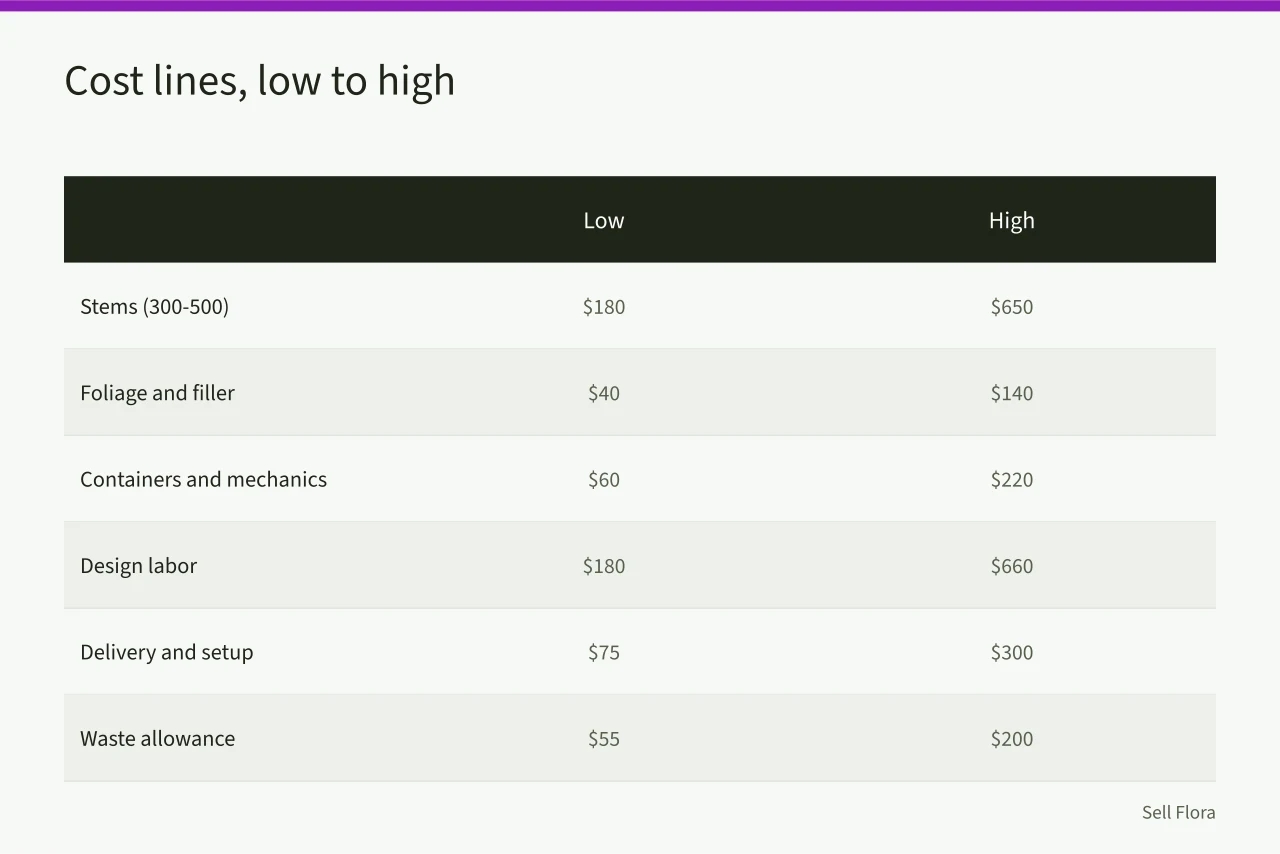
The table below is illustrative for a 12-table outdoor wedding with a bridal party of eight. Figures are USD and reflect small-farm direct sales in most US markets; your numbers will differ by region and season.
| Line | Low | High |
|---|---|---|
| Stems purchased or grown (300 to 500 stems) | $180 | $650 |
| Foliage and filler | $40 | $140 |
| Containers and mechanics (vases, foam-free tape, wire) | $60 | $220 |
| Design labor (10 to 22 hours at $18 to $30/hr) | $180 | $660 |
| Delivery and setup (one to two trips) | $75 | $300 |
| Waste and spoilage allowance (10 to 20 percent) | $55 | $200 |
| Total cost | $590 | $2,170 |
| Quoted price at 2.5x to 3.5x | $1,475 | $7,595 |
Most small farms land in the middle of the quoted range, around $1,800 to $3,500 for an event this size. The spread is driven by whether you grew the stems or bought them.
A quote that does not name a deposit and a cancellation date is a favor, not a sale.
What scale changes
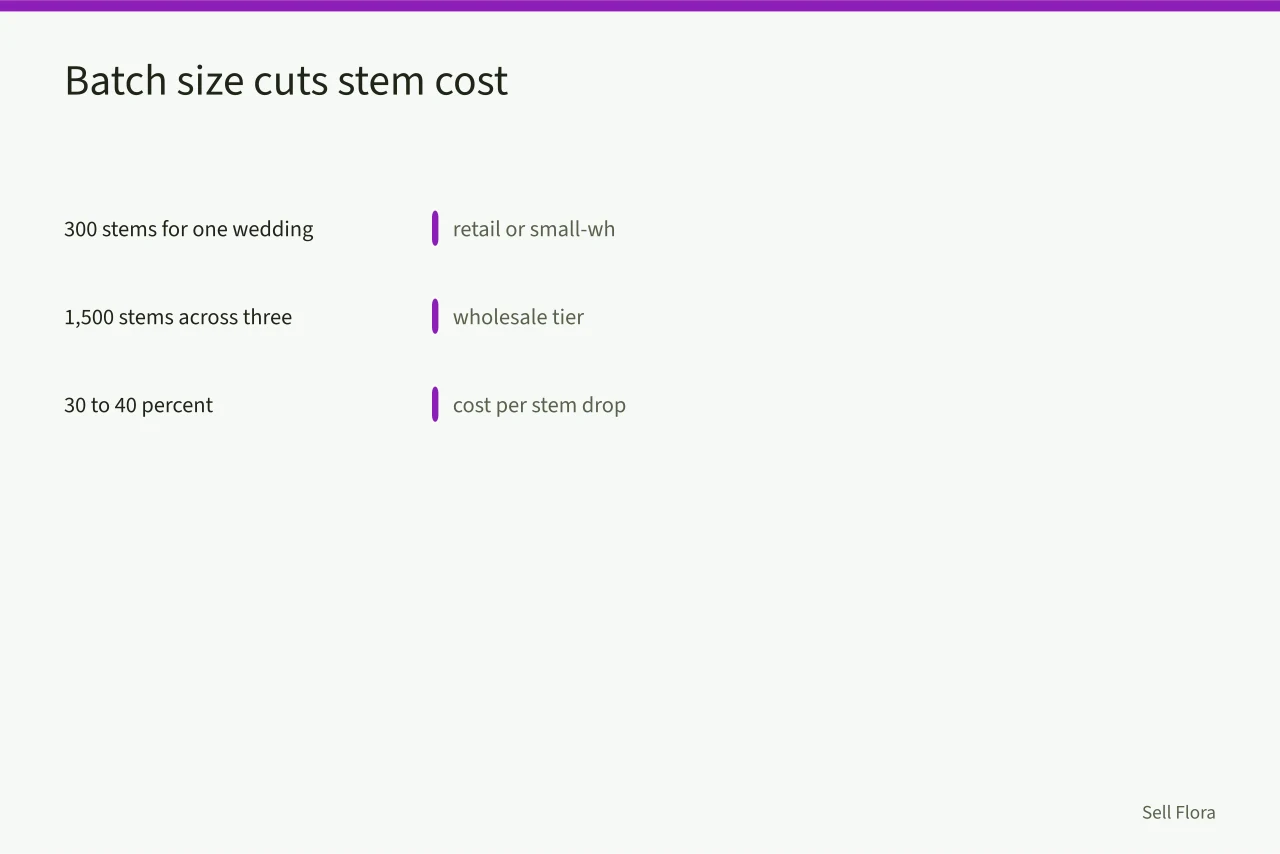
Batch size is the lever. Buying 300 stems for one wedding means retail or small-wholesale prices. Buying 1,500 stems across three weddings in one weekend moves you to a wholesale tier, and cost per stem can fall by roughly 30 to 40 percent.
Labor does not scale the same way. Design hours per event drop only slightly when you build several at once, because each palette is different. Delivery, however, spreads well: one van, three venues, one route.
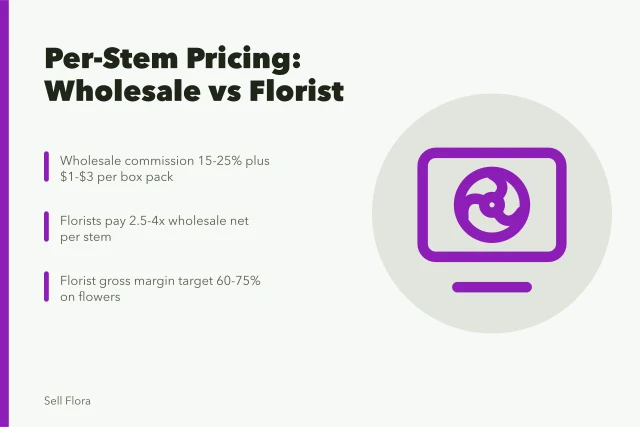
A farm growing its own stems has a different cost curve. Seed, corm, and tuber costs are low per stem, but the land, water, and harvest hours are fixed. That is why growers who sell weddings should track cost per stem from their own pricing per stem for US wholesale versus florist sales figures before quoting an event.
Season matters. A June wedding in most US zones can be supplied from the field. A February wedding usually means imported stems, and imported material carries a higher landed cost. See how that math works in cross-border cut flower trade, importing from Colombia and Ecuador into the US.
What is easy to forget
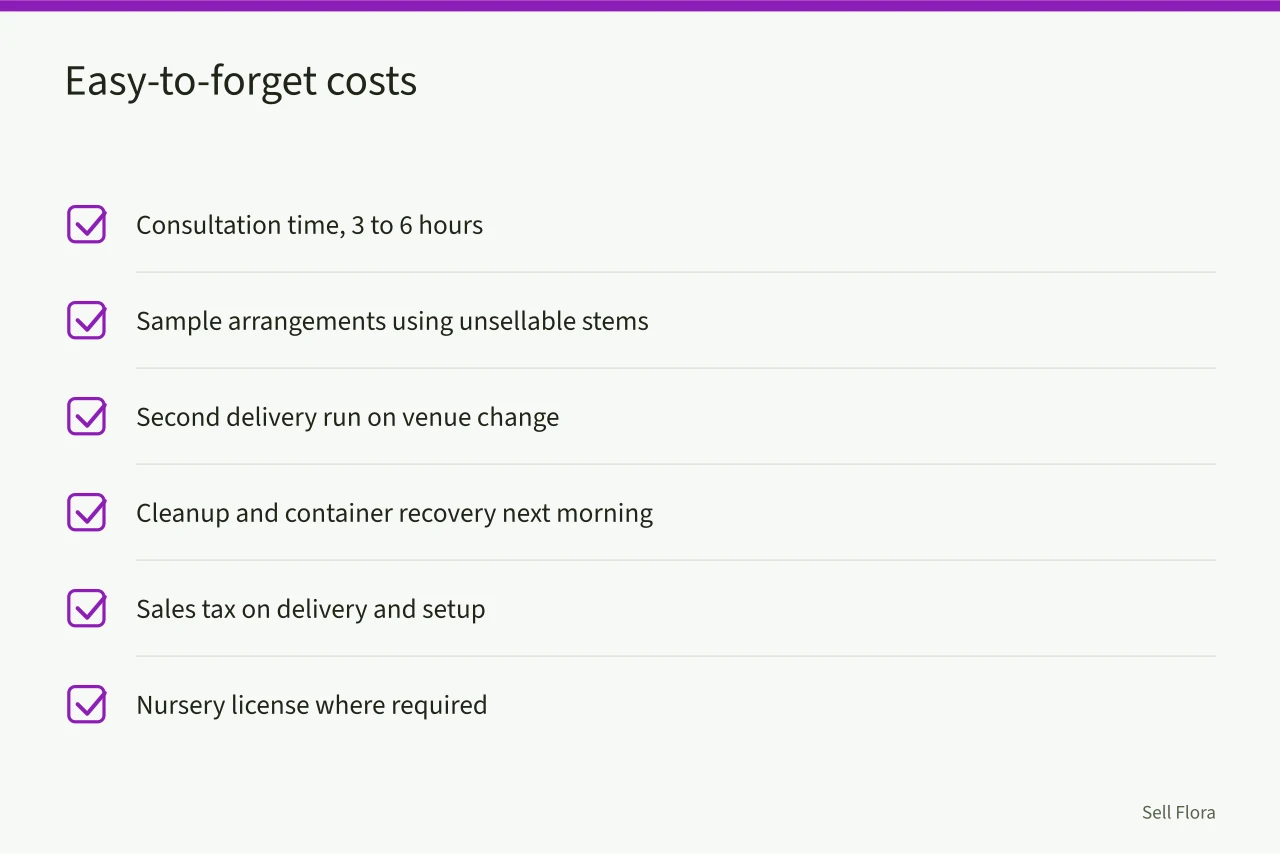
- Consultation time, often 3 to 6 hours before a contract is signed
- Sample arrangements for the couple, which consume stems you cannot sell
- A second delivery run when a venue changes the setup time
- Cleanup and container recovery the morning after
- Sales tax treatment on delivery and setup charges in your state
Insurance and licensing belong here too. Some states require a nursery license to sell plants and plant material, and California is the clearest example, with licensing rules set out by the CDFA nursery program. Cut stems for events may fall outside that, but the question is worth a call before your first contract.
Where the margin actually goes
Margin does not come from the markup. It comes from three places: growing your own stems, filling a weekend with more than one event, and charging for delivery and setup as separate lines rather than absorbing them.
A farm that grows its own material and books two weddings per weekend can hold 60 percent gross margin on a $2,000 event. A farm that buys every stem and books one event at a time often clears 25 percent, and sometimes less after a failed crop forces a substitution.
Track it per event, not per season. The USDA Census of Agriculture publishes specialty crop and floriculture data that helps you sanity-check per-acre income, available through the USDA Census of Agriculture.
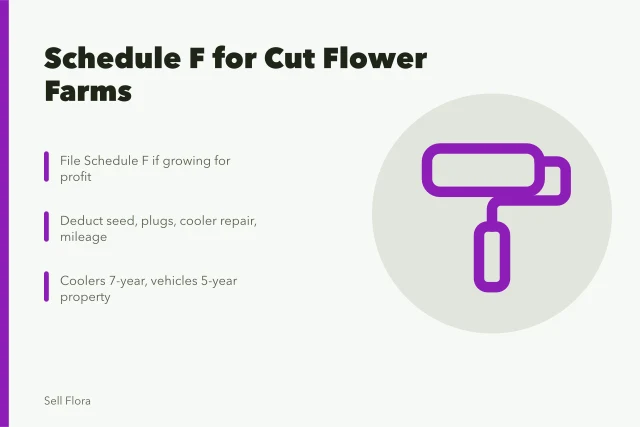
Contracts should state the deposit, the balance due date, the substitution policy, and what happens if weather or crop failure changes the palette. That last clause protects you. For the tax side of the same operation, IRS Schedule F and farm deductions for a small US cut flower operation covers what you can write off against event income.
Common questions
How much deposit should I ask for? Fifty percent at booking is the US norm, and it should be non-refundable. Ask for the balance 14 days before the event so a cancellation does not leave you holding perishable stems.
Should I quote per stem or per package? Per package. Couples compare totals, and a package lets you price labor, delivery, and waste without arguing about individual stems.
What markup is too low? Below 2x on cost, a single failed crop or a late venue change wipes out the job. Stay at 2.5x or higher unless the event is filling an otherwise empty weekend.
Do I need a nursery license to sell wedding flowers? Rules vary by state and usually target plant stock rather than cut stems. Check your state agriculture department, and start with the CDFA plant health and pest prevention services if you grow in California.