Guides
Dried flowers vs fresh cuts: which has better margins for a small flower farm?
Dried flowers vs fresh cuts margins decide how a small US flower farm pays its bills. Here is a criteria table, US pricing, and where each crop wins.
What to take away
- Fresh cuts usually return more per square foot in the first season, because they sell fast and need no drying space.
- Dried stems return less per stem but keep for a year or more, so unsold stock is not a total loss.
- Dried work is a value added product, which means labor and packaging decide the margin more than the field does.
- The gap shows up in winter, when fresh supply drops and dried bundles still sell at craft markets and online.
- Most small farms do better running both, with fresh cuts paying the bills and dried stock filling the slow months.
A small flower farm rarely fails because the flowers were bad. It fails because the money arrived in one narrow window and left again before the next crop. Comparing dried flowers with fresh cuts is really a question about when cash comes in and how much of the crop you can sell at full price.
The two products share a field, a cooler and a customer list. They do not share a calendar. Fresh cuts are perishable and priced by the stem. Dried flowers are priced by the bundle or the arrangement, and their value depends on how much handling you add after harvest.
The criteria that matter
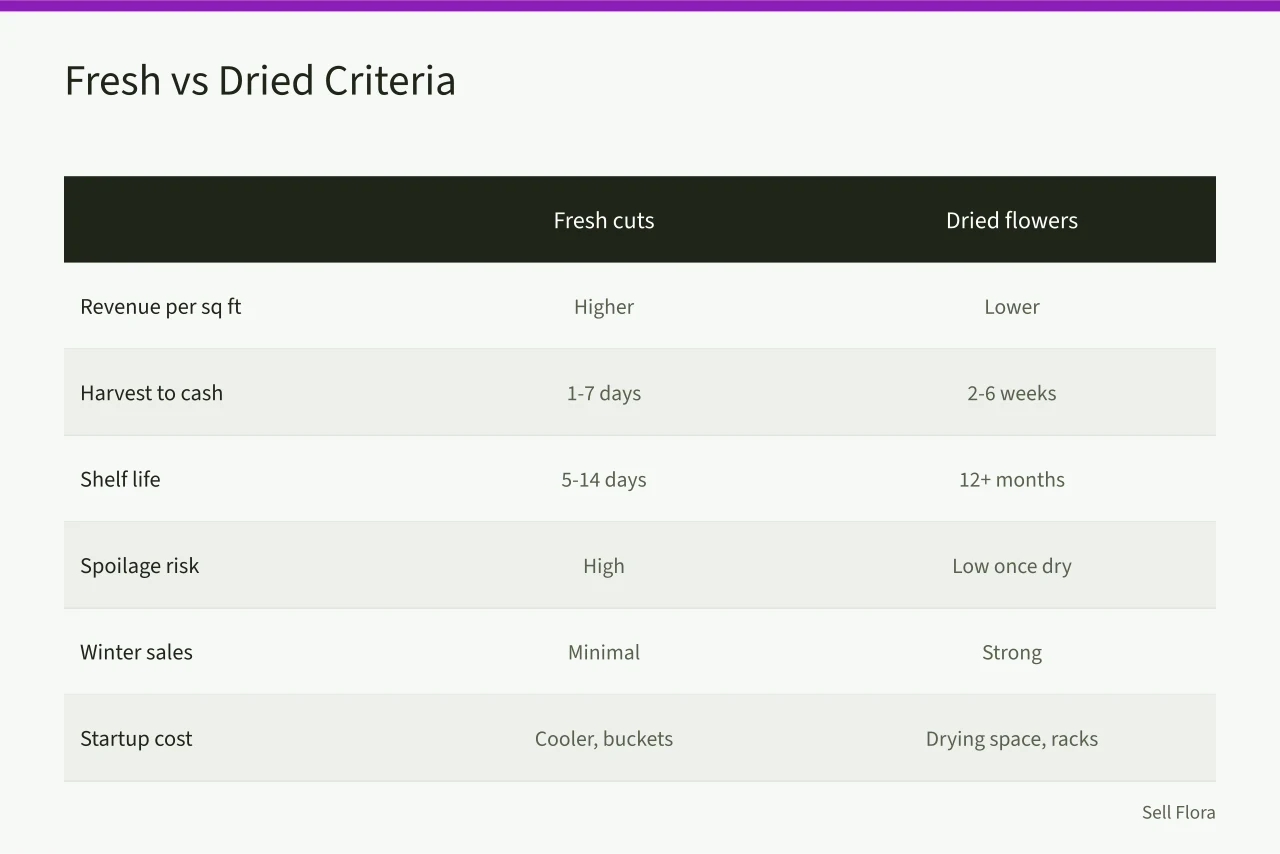
| Criterion | Fresh cuts | Dried flowers |
|---|---|---|
| Revenue per square foot, first season | Higher | Lower |
| Time from harvest to cash | 1 to 7 days | 2 to 6 weeks |
| Shelf life | 5 to 14 days | 12 months or more |
| Post-harvest labor | Grading, cooling, hydrating | Hanging, drying, stripping, wrapping |
| Spoilage risk | High | Low once dry |
| Winter sales | Minimal without imports or storage | Strong |
| Startup cost | Cooler and buckets | Drying space and racks |
Purdue Extension's cut flower budget work (ID-436-W) treats fresh production as a per-acre return question, with revenue tied to stem counts and wholesale price. That is the right frame for fresh cuts. Dried flowers behave more like a craft good, where the bundle price reflects presentation as much as the plant.
Fresh cuts, option by option
Fresh cuts win on speed and on price per unit. A bunch of snapdragons or zinnias sold at a farmers market in July turns field labor into cash within days. Wholesale accounts want consistent stem length and grade, which pushes growers toward a smaller list of dependable varieties.
Snapdragons are a good example of a crop that rewards planning. They are cool-season annuals, often started indoors 6 to 8 weeks before the last frost, and that timing decides whether you hit the spring market or miss it. See snapdragon growing notes for the sowing window.
Fresh margins are also exposed. One hot week, one broken cooler, one late delivery, and the crop is compost. The postharvest loss turnaround notes explain how quickly a fresh harvest can move from sellable to waste.
Dried flowers, option by option
Dried flowers win on timing and waste. Strawflower, statice, celosia, ammobium and dried grasses can be cut, hung and stored, then sold in November or February when fresh supply is thin.
A bundle that costs a few dollars in seed and labor can carry a retail price of $12 to $25 at a craft fair, depending on size and wrapping.
Online dried flower sales have grown on marketplaces and small shop platforms, and that channel rewards photography and packaging more than field scale. The catch is labor. Stripping leaves, bundling, labeling and shipping can eat the margin that the drying room appeared to create.
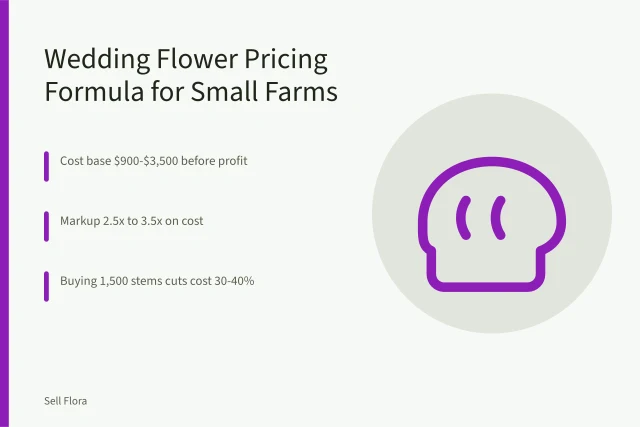
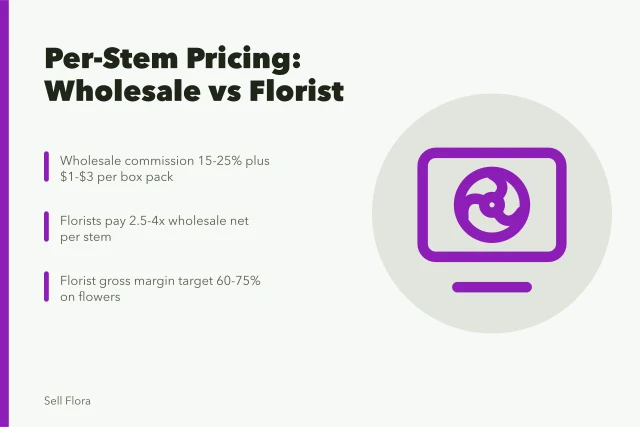
Growers who treat dried stock as a value added product, not a leftover, tend to price it better. The pricing per stem comparison is useful here, because it shows how much of a fresh margin comes from the sales channel rather than the crop.
Where each one wins
Fresh cuts are right when you have a reliable market within driving distance, a cooler, and a customer who buys weekly. That is the classic farm stand and florist account model, and it pays for land, water and labor in the same season.
Dried flowers are right when your market is seasonal, your winters are slow, or you sell online and at craft events. They also suit growers with more barn space than cooler space. A drying rack costs far less than a walk-in cooler.
- Track stems harvested and stems sold for one crop.
- Record drying loss, meaning stems that mold or shatter.
- Price dried bundles by labor minutes, not by guesswork.
- Compare net return per square foot after packaging and shipping.
Example
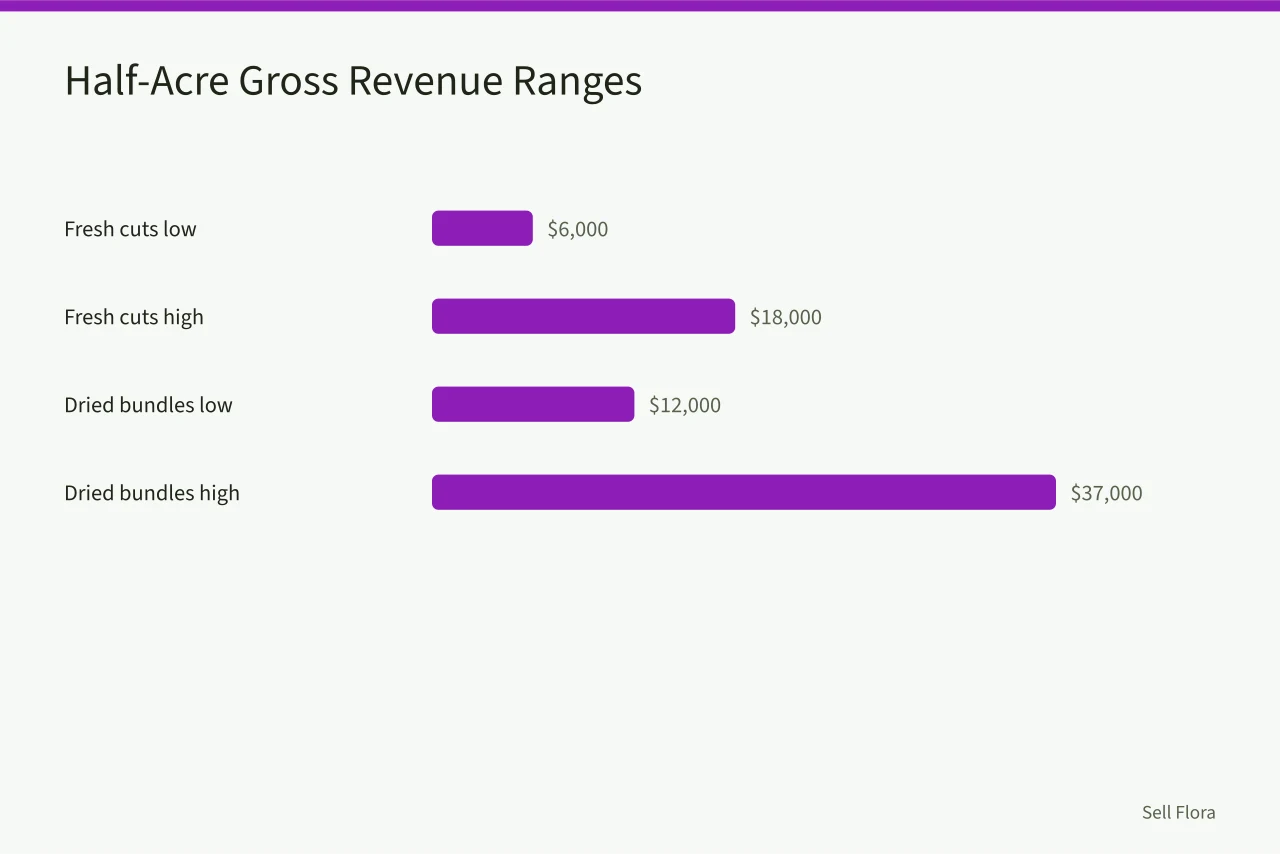
A half-acre plot might cut 8,000 to 12,000 marketable stems in a season at $0.75 to $1.50 per stem retail, giving $6,000 to $18,000 gross.
The same ground planted to strawflower and statice might yield 1,500 to 2,500 dried bundles at $8 to $15 each, or $12,000 to $37,000 gross. That holds only if every bundle sells.
Unsold fresh stems are worthless, while unsold dried bundles are inventory.
What neither one solves
Both products depend on the same two limits: labor and weather. Dried flowers do not remove harvest labor, they move it later. Fresh cuts do not remove price risk, they concentrate it into a few weeks.
Neither crop fixes a weak sales channel. If you cannot sell 200 bunches in July, drying 200 bunches will not create demand in January. The USDA hardiness zone and frost calendar still governs what you can grow and when, whatever you do with the harvest.
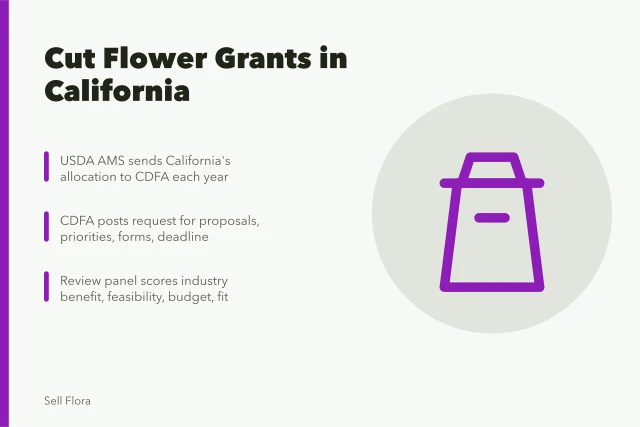
Nursery licensing and plant health rules apply to both. In California, nursery stock rules are set out by the state agriculture department, and growers who sell plants rather than cut stems should check the nursery licensing requirements before assuming an exemption.
Common questions
Do dried flowers have higher margins than fresh cuts? Not per stem. They often have higher margins per hour of winter work, because the stock is already paid for and the sale is incremental.
How much does it cost to start drying? A basic rack, fan and dark dry space can be set up for a few hundred dollars, far less than a used cooler. Packaging and labels are the recurring cost.
Which sells better online? Dried bundles and arrangements ship better and survive transit, so they suit online sales. Fresh cuts need cold chain and fast delivery, which raises cost per order.
Should a first-year farm do both? Yes, but keep dried production small. Test whether your market will pay for dried stock before you plant a quarter acre of it.