Reviews
Part of From seed lot to hardened transplant: propagating cut flowers step by step
Propagation compared: direct seed, transplant, cutting, and division for cut flowers
Direct seed, transplant, cutting, and division compared for cut flower crops by genetic consistency, timing, labor, equipment, root disturbance, cost, and scale.
What to take away
- Direct seeding avoids nursery work but depends on a well-prepared field and consistent emergence.
- Transplants provide a head start and exact spacing but consume protected space and labor.
- Cuttings preserve a parent's genetics, subject to plant rights, and require healthy stock plants.
- Division produces larger starts from established plants but has a low multiplication rate.
Propagation method changes the whole crop system: order timing, protected space, equipment, field preparation, stand uniformity, disease risk, and cash flow. A species may support more than one route, but the cultivar and production goal can narrow the practical choice.
Side-by-side comparison
Propagation Methods at a Glance
Direct seed
- Genetic result
- Variable or uniform
- Speed to field
- Sown directly
- Main resource
- Seedbed and field care
- Primary risk
- Uneven emergence
Transplant
- Genetic result
- Selected seed genetics
- Speed to field
- Nursery head start
- Main resource
- Trays, light, labor
- Primary risk
- Root stress and loss
Cutting
- Genetic result
- Clone of stock
- Speed to field
- Depends on rooting
- Main resource
- Stock and rooting environment
- Primary risk
- Disease and rooting failure
Division
- Genetic result
- Clone of parent
- Speed to field
- Large starting piece
- Main resource
- Established stock and digging
- Primary risk
- Low multiplication and damage
Genetics
- Direct seed
- Variable unless the seed line is uniform
- Transplant
- Variable as seed unless plugs are vegetative
- Cutting
- Identical to the parent, with rights limits
- Division
- Identical to the parent
Timing
- Direct seed
- Zinnia after last frost, cut in 60 to 70 days
- Transplant
- Lisianthus 5 to 6 months from seed to bloom
- Cutting
- Dahlia roots in 2 to 3 weeks
- Division
- Peony in late summer, 2 to 3 years to full bloom
Labor
- Direct seed
- Heavy at thinning
- Transplant
- High
- Cutting
- High
- Division
- Moderate
Equipment
- Direct seed
- Seeder, irrigation, fine seedbed
- Transplant
- Trays, cells, heat, light, benches
- Cutting
- Stock plants, mist, heat mat, hormone
- Division
- Spade, knife, labels, mulch
Root disturbance
- Direct seed
- None
- Transplant
- Moderate
- Cutting
- None
- Division
- High, crown and roots cut
Cost
- Direct seed
- $0.16 to $0.37 per survivor
- Transplant
- $0.41 to $0.76 per survivor
- Cutting
- $0.40 in house, $2.50 as a liner
- Division
- $0.50 to $1.50, mostly labor
Scale
- Direct seed
- 1,000 plants and up
- Transplant
- 500 to 5,000 plants
- Cutting
- Limited by stock count
- Division
- Low, parent limits the count
Direct seeding
Direct sowing works when seed can be placed at the right depth in suitable soil and the emerging crop can compete with crusting, weeds, pests, and weather. It eliminates transplant shock and indoor bench work. It can also scale efficiently with a calibrated seeder.
Zinnia, cosmos, and sunflower direct seed well. Zinnia sown after the last frost is cut in 60 to 70 days.
The field must be ready on the sowing date. A rough seedbed, failed irrigation, or heavy rain can erase the labor savings. Tiny seed makes depth and moisture control demanding. High-priced seed may justify more protected establishment.
Direct seeding works best when placement provides consistent depth, soil contact, and spacing. The equipment must suit the seed and scale, and the resulting stand still needs to be counted. A fast pass with a poorly calibrated seeder does not save labor if workers must thin dense strips and fill long gaps.
Choose direct seeding when the crop resents disturbance, germinates quickly in field conditions, or is inexpensive enough to allow a planned stand adjustment.
Transplanting
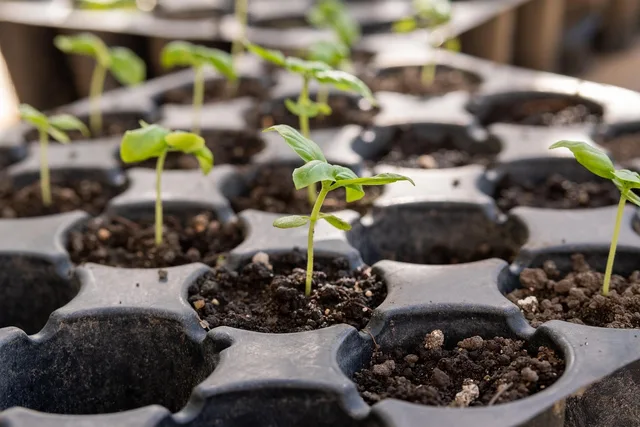
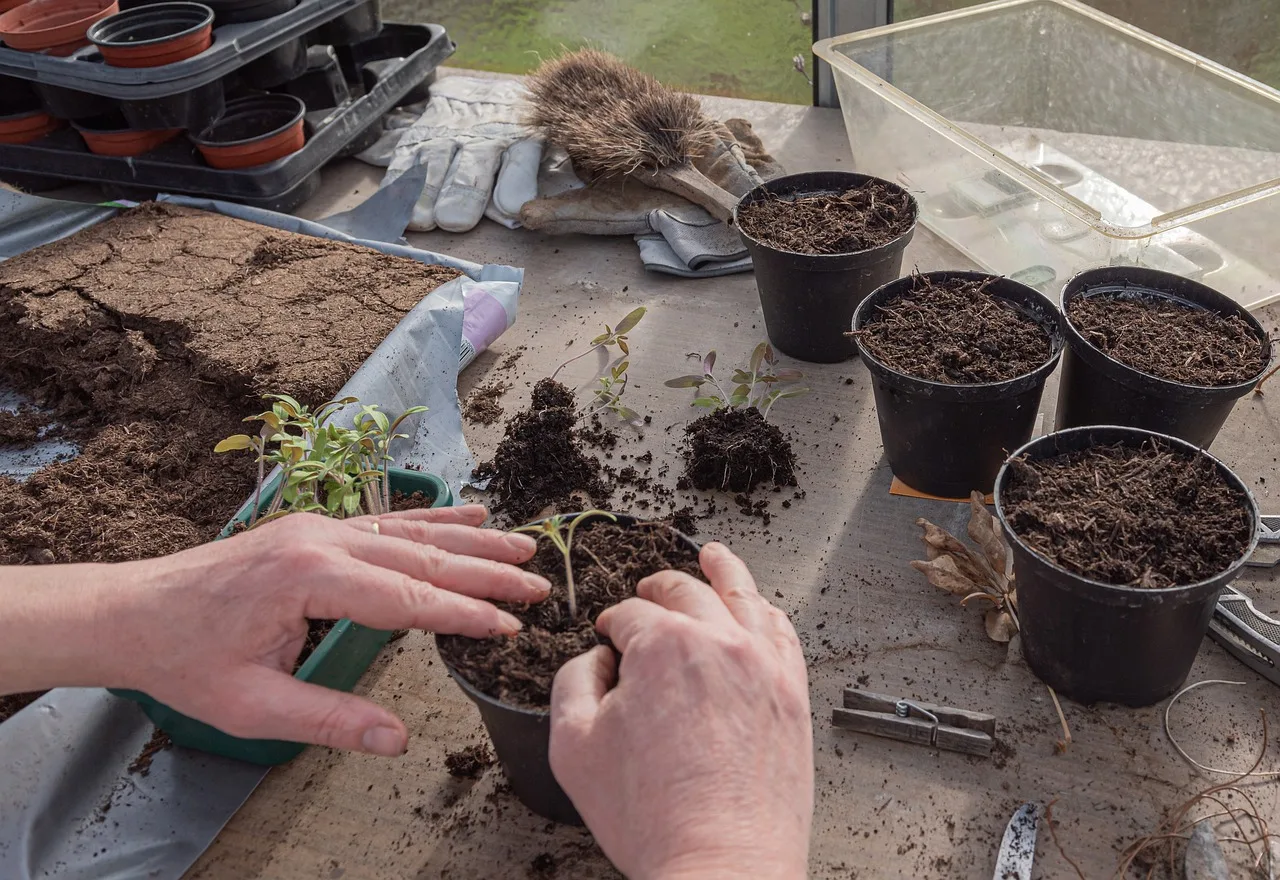
Transplants move germination and early growth into a protected environment. They allow exact field spacing and can give slow or warmth-loving crops a head start. A nearly full stand is possible when strong plants are selected before field placement.
Lisianthus, snapdragon, stock, and dianthus are usually transplanted. Lisianthus needs five to six months from seed to bloom.
The cost includes seed-starting medium, trays, lighting or greenhouse space, water, sanitation, hardening, and planting labor. Bad scheduling turns the advantage into oversized, root-bound plants. Small cells dry quickly; large cells reduce shelf capacity.
Although crop examples differ, Penn State's comparison of seeds and transplants illustrates the decision factors: root sensitivity, season length, suitable soil temperature, artificial light for indoor production, and gradual hardening before outdoor planting. Apply those factors to the specific flower rather than transferring vegetable dates. For lisianthus, the season length factor settles the choice.
Choose transplants when establishment value exceeds nursery cost or when a crop needs a protected head start to reach the sales window.
Cuttings
A cutting is a severed stem, leaf, or root section induced to form a new plant. It copies the source plant's genetics, which helps maintain a named color, form, or growth habit that seed may not reproduce.
Chrysanthemum, dahlia, and carnation are common cutting crops. Dahlia shoots root in two to three weeks.
Stock plants must be true to type, healthy, labeled, and managed for suitable shoots. Cuttings need crop-specific maturity, node count, leaf area, wounding, hormone, medium, temperature, humidity, and light. Too much humidity can encourage decay; too little can wilt tissue before roots form.
Check whether a cultivar is patented, licensed, or otherwise restricted. Owning a plant does not always grant commercial propagation rights.
Choose cuttings when genetic fidelity matters and the operation can maintain clean stock and a stable rooting environment.
Division and separation
Division splits an established crown, rhizome, or tuber into viable sections. Separation removes naturally formed bulbs, cormels, or offsets. Both preserve the parent's genetics and often create a larger start than a seedling.
Peony, daylily, and iris are divided. Peony is split in late summer and may need two to three years to bloom again.
NC State Extension's chapter on plant propagation methods distinguishes cuttings, layering, division, separation, budding, grafting, and tissue culture. It notes that a successful division must retain the structures needed to resume growth. For peony, that means a section with three to five eyes.
The multiplication rate is limited by the parent plant. Digging and cutting can spread disease or damage important stock. Timing differs among species, and a newly divided plant may need a recovery season before heavy harvest.
Choose division for suitable established perennials when a moderate number of true-to-type plants is needed and stock health is confirmed.
Compare cost per field survivor
Calculate:
total propagation cost / established field plants = cost per survivor
Include seed or stock, media, cells, heat, light, water, sanitation, labor, greenhouse allocation, failed lots, hardening, field planting, and replacements. For direct seeding, include seedbed work, seeder calibration, thinning, gap filling, and weed control.
A five-cent seed is not a five-cent plant. A purchased plug may be cheaper than an in-house seedling when it frees a full shelf for a higher-value crop.
Worked example, 1,000 zinnia. Seed costs $15 to $60. Seedbed, sowing, and thinning labor runs $120 to $200. Total $135 to $260, or $0.16 to $0.37 per survivor at 70 to 85 percent establishment.
A 1,000-plug order costs $300 to $600, plus $90 to $120 to plant. At 95 percent establishment that is $0.41 to $0.76 per survivor.
Common questions
Is direct seeding always less expensive?
No. Failed emergence, thinning, weeding, and reseeding can exceed nursery cost. Compare established plants and timing.
Do cuttings always match the parent?
They generally copy its genetics, but mutations, disease, labeling errors, and growing conditions can change the result or appearance.
Can every perennial be divided?
No. Species differ in crown structure, timing, and tolerance. Use crop-specific guidance.
Which method gives the earliest flowers?
It depends on crop biology, starting material, environment, and field date. A mature division may flower quickly, while an overgrown transplant can stall.