Guides
Tuberose vs peony: which cut flower suits a small southern farm?
Tuberose vs peony cut flower: southern heat and humidity favor tuberose, while peony chill needs make it risky in USDA zones 8-9 from Georgia to Texas.
What to take away
- Tuberose fits USDA zones 8-9 from Georgia to Texas better than herbaceous peony because it needs summer heat and no winter chill.
- Peony can flower in the South, but it is risky below about 500 chill hours, and warm winters push bloom earlier and lower stem quality.
- Tuberose produces saleable stems in 90-120 days from bulbs; peony often needs 2-3 years from bare roots before a full harvest.
- Tuberose suits new small southern farms selling fragrant summer stems; peony suits growers with a chill pocket and patience.
Two cut flower crops sit at opposite ends of the heat tolerance scale. A small southern farm in USDA zones 8 through 9 from Georgia to Texas has long, humid summers and short, warm winters. Those conditions decide which stems survive and which become compost. A cut flower production overview is useful, but southern heat changes the math.
The two crops compared
Tuberose, Polianthes tuberosa, is a tender perennial bulb grown for its tall, fragrant white flower spikes from midsummer into fall. Peony, Paeonia lactiflora and hybrids, is a long-lived herbaceous perennial that flowers once in spring from buds set the previous fall. This article compares them for a small cut flower farm in the humid South, not for a northern or coastal cool-climate site.
Criteria that matter on a zone 8-9 farm
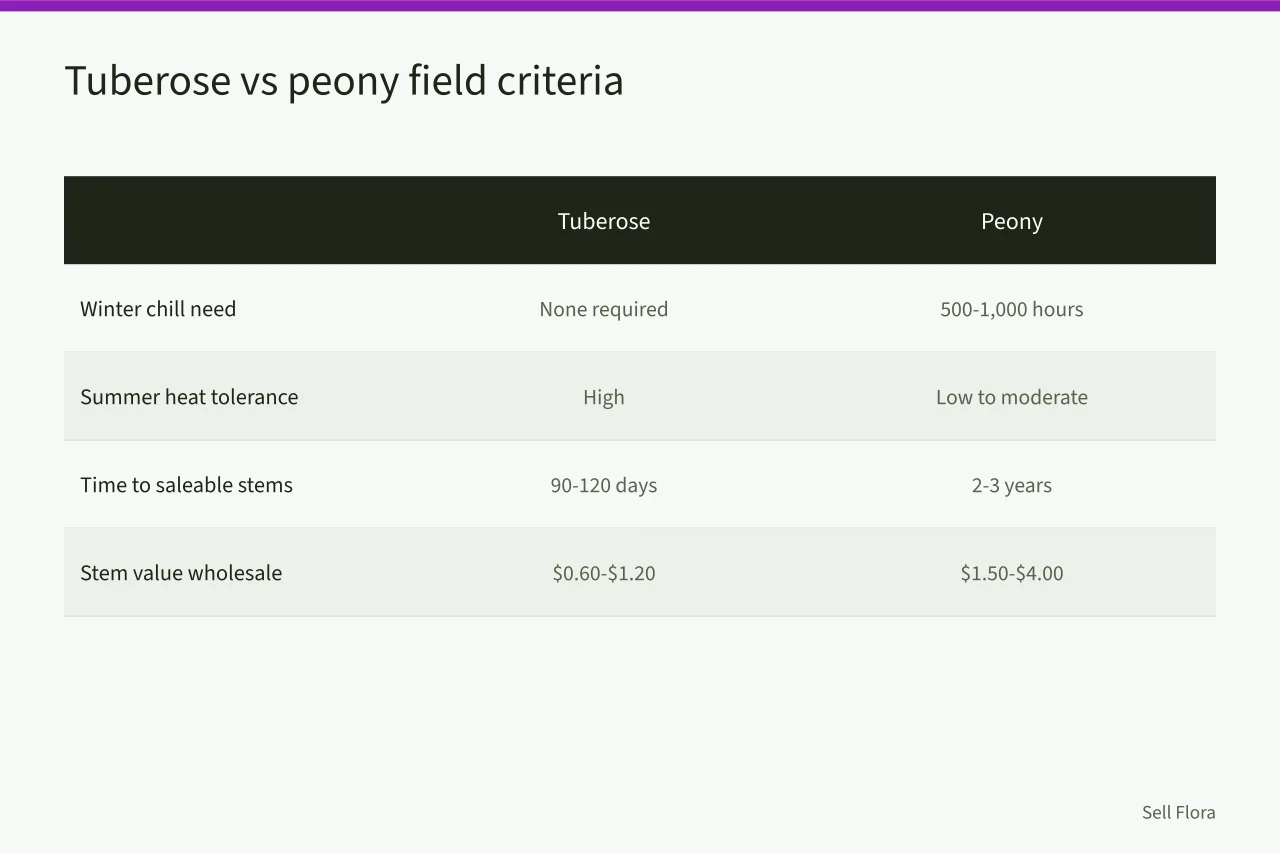
The comparison rests on four field criteria: winter chill, summer heat tolerance, time to first harvest, and stem value. Chill hours below 40 degrees F are the main separating factor. Soil moisture and disease pressure run second.
| Criterion | Tuberose | Peony | Field note |
|---|---|---|---|
| Winter chill need | None required | 500-1,000 hours below 40 F | Warm winters reduce peony bloom |
| Summer heat tolerance | High; blooms July-September | Low to moderate; foliage declines above 90 F | Tuberose keeps producing |
| Time to saleable stems | 90-120 days from bulbs | 2-3 years from bare roots | Tuberose pays sooner |
| Stem value, wholesale range | $0.60-$1.20 per stem, illustrative | $1.50-$4.00 per stem, illustrative | Peony earns more when it survives |
Tuberose: a heat-tolerant southern crop
Tuberose bulbs go in the ground after the last frost. They want full sun, well-drained soil, and steady moisture during the growing season. Heat drives flower spike formation, so a long Georgia or Texas summer is an asset rather than a liability. The botanical profile of Polianthes tuberosa describes a plant that performs well in warm climates and produces cut flower spikes used by florists for fragrance work.
On a Georgia or Texas farm, the question is not which flower is prettier. It is which one will produce enough saleable stems in year one and year three without consuming the whole cooler.
Peony: chill hours and summer stress
Herbaceous peonies need a cold period to break dormancy and set flower buds. Most perform best with 500 to 1,000 chill hours below 40 F, as noted in the peony cultivation notes. In zone 8 and 9 gardens, winter chill can be unreliable. A warm January followed by a hot May pushes stems to open short and fast, and bloom can arrive before festival demand builds.
Where each one wins
Tuberose is the right choice for a small southern farm that wants a reliable summer crop and sells at farmers markets or to florists who need fragrance work. It tolerates long heat, multiplies from bulb offsets, and returns year after year if bulbs are lifted or mulched. A grower in central Georgia can plant bulbs in April and cut stems by late July.
Peony fits only a site with a real chill pocket: a north-facing slope at higher elevation in north Georgia or the Texas Hill Country. The grower must wait two or three seasons for a full flush.
For a market grower, Pricing per stem shifts the decision away from romance and toward saleable stems.
Shared limitation
Both crops share a postharvest problem: stems must be cut, hydrated, cooled, and sold within a narrow window. Neither tuberose nor peony can sit in a hot truck without losing vase life. The postharvest loss turnaround notes explain why a cooler full of stems is not money until those stems leave the door. A southern farm without reliable cool storage will lose both crops in the same way.
Example: one southern bed plan
To see the trade-off, lay out a 50-foot bed. Choose one crop only at first, because bed prep and harvest labor differ. Check USDA hardiness zones and first-frost dates before setting out bulbs in a field that might catch an early cold snap.
- Mark the bed after the last frost date for your county.
- For tuberose, plant bulbs 6 inches apart in rows 12 inches apart, and side-dress with compost at planting.
- For peony, dig holes 2 feet apart, set eyes no deeper than 2 inches below soil, and mulch lightly the first winter.
- Keep a harvest log of stems per week and hours spent cutting.
- Compare saleable stems at the end of year one and year three before expanding.
Common questions
Which crop has better vase life? Tuberose stems generally last 7-10 days in clean water, while peony stems last 5-7 days but are more sensitive to heat during transport. Both need a cool room and a clean bucket.
Can peonies grow in zone 8? Yes, but only where winter chill is consistent and summer heat is moderated by elevation or afternoon shade. A north Georgia mountain site is more likely to succeed than a Houston backyard.
Is tuberose profitable on a small southern farm? It can be, because bulbs multiply and stems sell for summer events, but profit depends on market access and postharvest handling. Sell at Texas farmers markets only after you confirm the market's vendor rules and sales tax requirements.
Which crop is less work? Tuberose is less work in the first two years because it does not need staking or heavy winter chill management. Peony requires more patience and bed preparation before it returns a full flush.