
Guides
Cut flower harvest and postharvest handling guide
Cut flower postharvest guide covering harvest stage, clean tools, hydration, conditioning, cooling, storage, packing, transport, and quality records.
What to take away
- Harvest stage is species specific and should match transport time and customer use.
- Clean, sharp tools and clean buckets protect stems at the first point of handling.
- Move cut flowers out of sun and into their assigned hydration treatment quickly.
- Cool crops to their recommended range and protect that temperature through delivery.
- Track vase tests, culls, and customer feedback by crop, cultivar, and harvest lot.
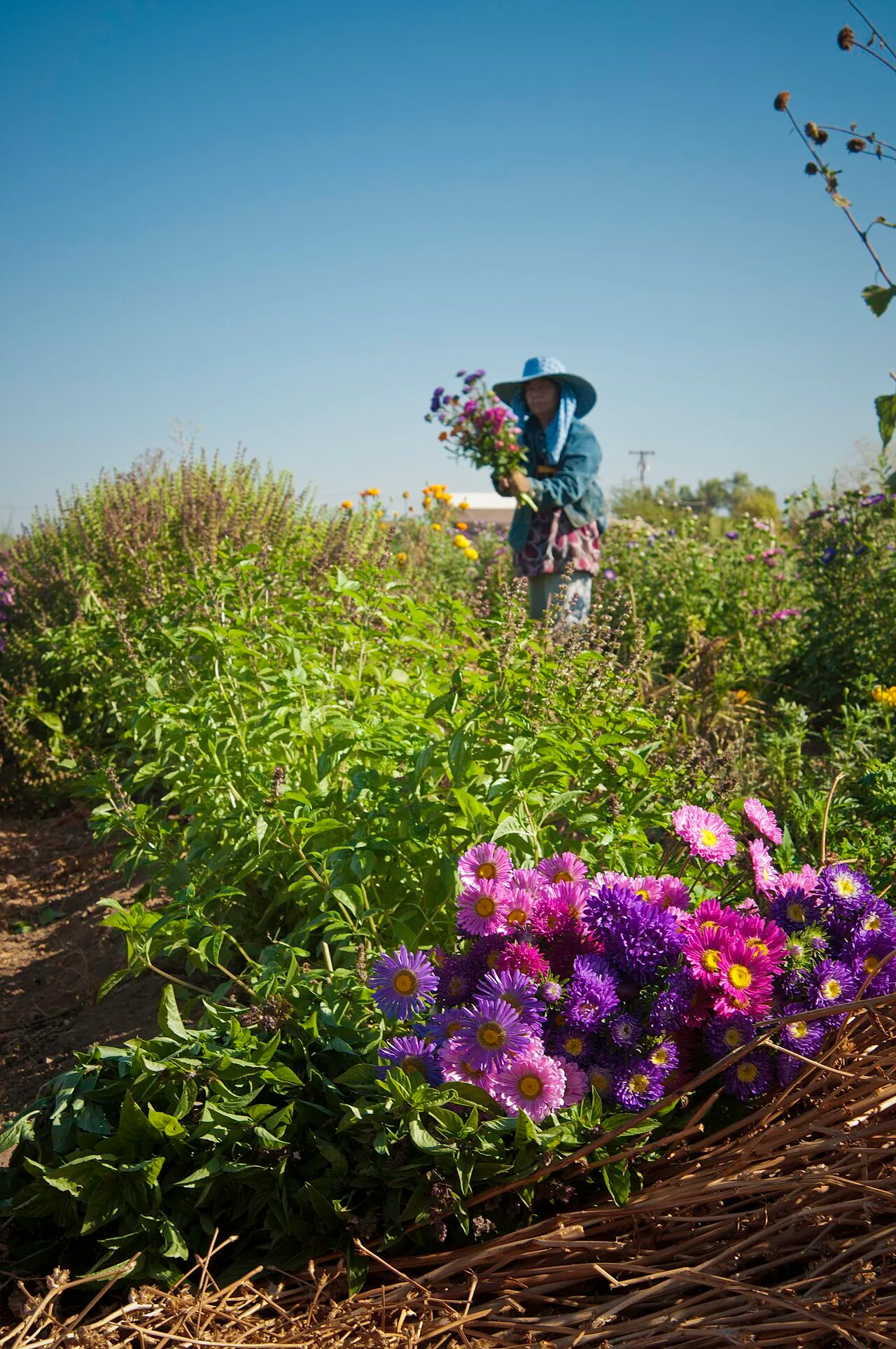
Once a flower is cut, field quality can be preserved but not rebuilt. The quality ceiling is set much earlier, starting with the first bed plan. Heat, water loss, crushing, dirty equipment, and the wrong storage environment all shorten the time available to the buyer. A good postharvest system therefore begins before the crew enters the field. NC State Extension's postharvest overview for cut flowers states the rule plainly: a crop is at its highest quality at the moment of harvest, and handling, cold storage, preservatives, and ethylene control only slow the decline.
The aim is a traceable cold and handling chain: correct stage, clean cut, prompt hydration, crop-appropriate treatment, cooling, grading, packing, transport, and a vase-life check.
Write a crop protocol
Every commercial crop needs a one-page handling card that states:
| Field | Required decision |
|---|---|
| Harvest stage | Bud, first color, partial opening, or full opening |
| Best harvest period | Cool part of day and dry-flower requirements |
| Cut method | Tool and stem position |
| Field container | Clean water, dry harvest, or crop-specific solution |
| Conditioning | Solution, concentration, time, and temperature |
| Storage | Wet or dry, position, temperature, humidity, maximum duration |
| Packing | Bunch count, sleeve, box, support, and ventilation |
| Sensitivities | Cold injury, ethylene, latex, bruising, bent stems, botrytis |
Use crop research and on-farm trials. Do not apply one flower's hot-water, dry-storage, or preservative treatment to another species.
Harvest at the correct stage
Stage affects whether buds open, petals withstand transport, pollen sheds, and vase life remains. Spike flowers, daisylike flowers, bulbs, woody stems, and fully open forms do not share one rule. Cultivars within a crop can differ.
Choose the stage from the customer journey. A florist holding stems for an event may need a tighter cut than a market shopper using flowers that afternoon. Record the stage with photographs and plain descriptions so harvesters can grade consistently.
Harvest cool, hydrated stems
Cut during the coolest practical period when plants are well hydrated and flowers are dry enough for the crop and packing method. Avoid leaving full buckets in sun. Shade the receiving area and shorten travel from bed to handling space.
University of California Cooperative Extension's practical cut flower postharvest guide recommends harvesting at correct maturity in cool conditions, using clean shears, buckets, and water, stripping lower leaves, and chilling flowers after harvest. It also stresses that each flower requires its own maturity guidance.
Prepare water and containers before cutting
Clean buckets through a documented wash and sanitation procedure suitable for the material and operation. Rinse when the product instructions require it. Keep cleaned buckets inverted or protected from dust, birds, pests, and splash.
Use water suitable for the crop and treatment. Measure floral solutions by label directions, not by color or a casual splash. Record product, lot, concentration, water volume, temperature where relevant, and preparation time. Discard and replace solutions according to the protocol.
Cut without crushing
Use sharp, clean snips, knives, or pruners matched to stem thickness. Place stems into the assigned container promptly. Do not drop bunches on soil or pack stems so tightly that flowers bruise.
Remove foliage that would sit below the solution line, but avoid excessive stripping that injures stems or increases labor without benefit. Keep bunch counts consistent and labels attached.
Condition by crop
Conditioning gives stems time to take up solution before sale or packing. It can include plain clean water, a commercial hydrating solution, or a crop-specific pulse treatment. Time, temperature, water chemistry, and concentration matter.
Do not use untested household mixtures. Sugar can feed microbes if acidity and biocide are not properly managed. Bleach concentration changes by product and storage. A formulated commercial product should still be measured and used only as labeled.
Remove field heat
Cooling slows respiration, water loss, development, and many decay processes. Move flowers into the crop's recommended range as soon as the protocol requires. Room cooling is simple but packed masses cool slowly and can warm the room.
Do not place warm, wet flowers into tightly closed sleeves and assume the cooler fixes them. Air movement, spacing, package vents, and load size affect cooling. Monitor product-zone temperatures, not only the thermostat.
Respect chilling and ethylene sensitivity
Many temperate flowers tolerate near-freezing storage, while tropical flowers can suffer chilling injury at much warmer temperatures. Some flowers are highly sensitive to ethylene from ripening produce, combustion, senescent material, or exhaust.
Keep the flower cooler separate from fruits and vegetables unless compatibility is confirmed. Maintain engines, heaters, and ventilation. Remove aging flowers and plant debris.
Grade before packing
Grade stems for length, straightness, maturity, bloom size, foliage condition, pest and disease damage, and cultivar. Separate seconds only when a defined buyer and price exist. A lower grade is not a mixed bucket of unknown problems.
Pack to prevent bending, rubbing, crushing, and dehydration. Pre-cool flowers before dense packing where required. Use labels that connect the package to harvest date, field, crop, cultivar, and crew.
Keep a delivery record
Log cooler departure, vehicle temperature, route, delivery, and rejected stems. Rejections and buyer comments feed the weekly sales review that decides next year's crop list. Protect boxes and buckets from sun and exhaust during loading. Secure upright loads and avoid overfilling buckets.
Run regular vase tests against a written method. Compare harvest stage, treatment, storage time, and season. The customer sees the final days, so postharvest success must be measured beyond the farm gate.
Common questions
Should every flower go directly into water?
No. Many do, but some crops are harvested or stored dry, and special treatments vary. Follow the crop protocol.
Is colder storage always better?
No. Tropical and subtropical flowers may be chilling sensitive. Use the recommended temperature range for the species and cultivar.
Can a cooler restore wilted flowers?
Cooling may reduce further loss, but it cannot reverse all dehydration, blocked stems, bruising, or heat damage. Diagnose the cause and use the crop's rehydration guidance.
How long should flowers be conditioned?
The time depends on crop, solution, temperature, prior stress, and sales plan. Record a defined protocol rather than leaving buckets indefinitely.
In this guide
- How to harvest and condition cut flowersHarvest and condition cut flowers with clean tools, crop-specific maturity, prepared buckets, shade, hydration, cooling, grading, labels, and vase tests.
- Wet storage, dry storage, and floral solutions comparedWet and dry cut flower storage compared with hydration, holding, and pulse solutions by purpose, crop fit, temperature, space, sanitation, and handling risk.
- Cut flower harvest and cooler checklistCut flower postharvest checklist covering maturity, tools, buckets, solutions, shade, cooling, grading, packing, transport, traceability, and vase tests.